
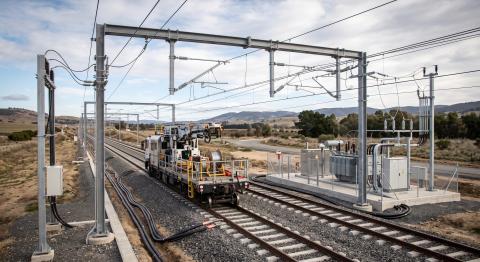
Temporary power projects rarely start calmly. A permanent substation falls behind schedule, a transformer fails in a storm, or a mine needs power at a new site months before a fixed station could ever be built. Then someone needs a solution quickly.
That's usually when people call us about a mobile electrical substation.
We're Swartz Engineering in Bristol, Virginia, part of Becker Global America, and we supply portable substations built on trailers, semi-trailers or skids, or inside a shelter as an E-House. Rather than a sales pitch, here are the questions we get asked most often, with the answers we actually give on the phone.
Key Takeaways
- Protection settings depend on the available fault current, the utility supply, and the loads being fed.
- Even though we test everything at the factory, the unit should be tested again after it arrives and gets connected.
- A good mobile electrical substation can move on to the next job.
What Do You Need From Me To Get Started?
Less than you'd think, at least at first.
We start with the incoming voltage from the utility, the voltage your equipment needs, and an honest estimate of your load, ideally with some room for growth. Those three pieces of information size the transformer and switchgear, which drive almost everything else.
After that, we'll ask about your site, your timeline, how long you expect to need the unit, and what protection your engineers or insurer expect to see.
Is It Really A Full Substation?
People are often surprised by this one. They picture something smaller, like a big generator.
Yes. A portable unit carries the same core equipment as a fixed station, just packaged so it can move.
There's a power transformer that steps voltage down, switchgear with circuit breakers to route and protect the power, and medium voltage cable connecting the two. Relay and control panels hold the protection that trips breakers when there's a fault, and auxiliary AC and DC supplies keep controls, lighting and battery chargers running.
We wire and test the equipment at our factory before it ships. That way, your contractor mostly handles incoming and outgoing connections and commissioning in the field, which keeps on-site work shorter.

GET IN TOUCH
The ultimate solution for reliable power control! call us at 276-285-3841
Trailer, Skid Or E-House. Which Should I Pick?
This is the question that takes the longest, and the right answer depends on how long you'll need power and how often the unit might move.
A trailer or semi-trailer unit makes sense when speed and mobility come first. It can be towed in, set up and moved again, which suits storm response and short-term work. Plan for oversize load permits, though, because these units are big.
A skid-mounted unit fits projects where the substation will stay put for a while but may move eventually, like a mine that shifts to a new area every few years. It gets set by crane onto a prepared pad.
An E-House puts the equipment inside a weatherproof building. That's often the better choice for dusty, wet, hot or cold environments, or anywhere the equipment needs extra protection over a longer stay.
What Does The Site Need?
Short answer? More prep than most people plan for. It's the part that feels easy on paper. It rarely is.
Plenty, and this is where schedules most often slip.
You'll need firm, level ground or a pad that can carry the weight, a clear path for delivery, and enough room around the unit for safe access and maintenance. Cable routes need planning for both the incoming supply and the outgoing feeders.
Then there's grounding. It's a big one.
Do I Really Need To Worry About Grounding?
Yes. We'll repeat this one as often as needed.
A substation needs a properly designed grounding system to protect people from dangerous step and touch voltages during a fault. IEEE 80 is the common guide for that design, and a temporary location doesn't make it less important. If anything, new soil conditions at each site make it more important to check.
Have your engineer design and test the ground grid for each location. Don't assume the last site's design carries over.

GET IN TOUCH
The ultimate solution for reliable power control! call us at 276-285-3841
Can We Reuse The Old Protection Settings?
We get it. Copying settings is fast. But fast and right aren't the same thing here.
Usually not without a review.
Protection settings depend on the available fault current, the utility supply, and the loads being fed. Move the unit to a new site and those numbers change. Have your engineer run a coordination study for the new location and set the relays to match.
What Happens At Commissioning?
Even though we test everything at the factory, the unit should be tested again after it arrives and gets connected. Shipping and setup can loosen connections or shift things around.
Commissioning typically includes checking connections, testing insulation, verifying relay settings and trip functions, and confirming the controls operate correctly. Then the unit gets energized under a careful, step-by-step plan.
Does Heat Matter?
Ask anyone who has opened a steel enclosure in August. They'll tell you.
It does, especially in summer. Transformers and switchgear produce heat, and a unit sitting in direct sun can run hotter than you'd expect.
We look at expected ambient temperatures and cooling needs during design, and E-House units can include ventilation or air conditioning. During operation, keep vents clear and keep an eye on temperatures during heavy load.
And When The Project Ends?
This is the nice part. The unit isn't scrap. It has a next job waiting.
A good mobile electrical substation can move on to the next job. De-energize it safely, disconnect it, and inspect it before it travels. That's a good time for maintenance, too, since it's already out of service.
If you're weighing your options right now, give us a call. We'd rather talk it through early than hear about it after a schedule has already slipped.
For more, see power control rooms and rail traction power solutions.
Plan Your Temporary Power
Call Swartz Engineering at 276-285-3841 or reach our team online. Tell us your voltage, load and timeline, and we will help you choose a mobile electrical substation that fits.
Frequently Asked Questions
Q: How long does setup take?
A: It depends on the site. Factory-tested modules only need to be connected, which keeps on-site work short.
Q: Do you offer E-House versions?
A: Yes. Units can be built inside a shelter as an E-House for harsher environments
Q: How do I estimate the load for a mobile electrical substation?
A: List the equipment the substation will serve, its voltage and power requirements, and any expected future growth. Have an engineer review the estimate before sizing the transformer and switchgear.
Q: Can one mobile electrical substation serve several pieces of equipment?
A: It can be designed to feed multiple loads through its switchgear. The equipment, feeder arrangement and protection settings should be selected for the specific site and load.
Q: Can I use the same mobile electrical substation at a new site?
A: Often, yes. Before relocating it, inspect the unit and confirm that the new site’s voltage, load, grounding conditions and protection requirements are suitable.
Products We Offer
Swartz Engineering strives to provide top-quality products to achieve our customer's needs. Our products include:
- Type 76 DC Relay
- Type 82 DC Relay
- Swartz Engineering’s Type 64 Ground Relay
- Type 32 Reverse Current Relay
- Type 150 DC
- CSM Shield Monitor
- Metal Oxide Surge Arrestors
- Transducers
- MVIS SL Slim-line Contactor
- Fully-tested Power Control Rooms
- Swartz Engineering’s Portable Substations
For nearly half a century, we have proudly led the industry in ensuring safety and efficiency. Swartz Engineering is a trusted family-owned company dedicated to providing top-notch power distribution solutions for the electrical industry. Contact us today.