Modern rail networks run on tight margins and unforgiving schedules. When the primary grid drops or a localized transformer blows, the financial fallout racks up by the minute. This guide explains how integrating mobile power infrastructure helps protect your rail yards, signal networks, and propulsion systems from catastrophic downtime.
Key Takeaways
- Instant Risk Mitigation: Rapid deployment of mobile units bridges critical power gaps during grid failures or infrastructure upgrades.
- Drastic Downtime Reduction: Pre-engineered electrical setups keep commuter and freight lines moving during complex substation maintenance.
- Accelerated Project Timelines: Contractors eliminate delays by utilizing temporary power drops during major track expansions.
- Rugged Infrastructure Support: Swartz Engineering custom-builds heavy-duty electrical solutions to keep American rail lines fully energized.
Why Do Modern Rail Networks Require On-Demand Electrical Flexibility?
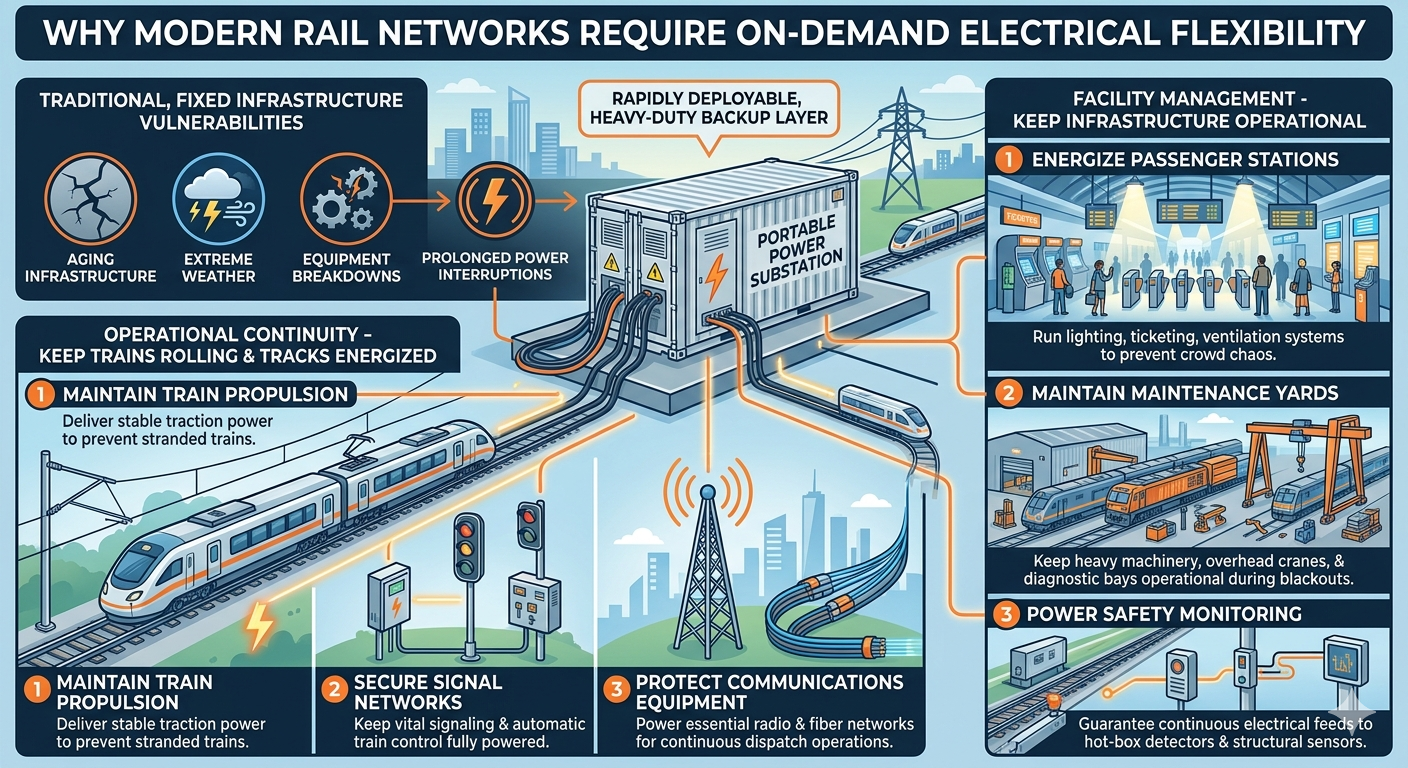
Rail transit systems cannot tolerate prolonged power interruptions without halting entire supply chains and transit corridors. Traditional, fixed electrical architecture remains vulnerable to aging infrastructure, extreme weather, and sudden equipment breakdowns. Utilizing portable power substations provides rail operators with a rapidly deployable, heavy-duty backup layer that keeps trains rolling and tracks energized when the main grid goes dark.
Operational Continuity
- Maintain Train Propulsion: Deliver stable traction power directly to overhead catenary lines or third rails to prevent trains from stranding between stations.
- Secure Signal Networks: Keep vital track-side signaling and automatic train control systems fully powered to avoid manual routing bottlenecks.
- Protect Communications Equipment: Power the essential radio towers and fiber-optic networks required for continuous dispatch operations.
Facility Management
- Energize Passenger Stations: Run critical lighting, ticketing gates, and ventilation systems to prevent chaotic commuter crowd-control issues.
- Maintain Maintenance Yards: Keep heavy repair machinery, overhead cranes, and diagnostic bays operational during localized blackouts.
- Power Safety Monitoring: Guarantee continuous electrical feeds to track-side hot-box detectors and structural integrity sensors.
GET IN TOUCH
The ultimate solution for reliable power control! call us at 276-285-3841
What Components Are Packed Inside a Transportable Substation?
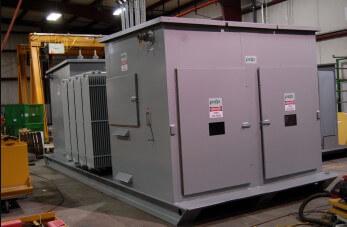
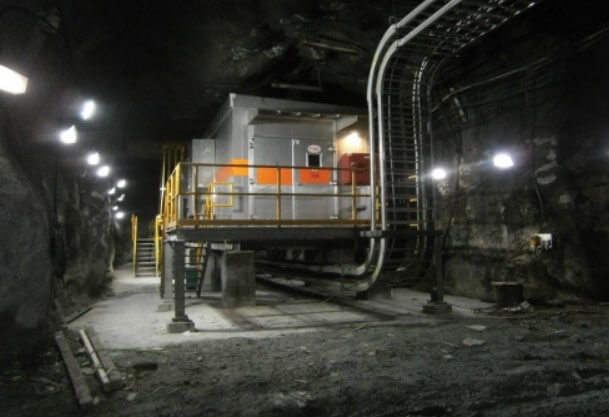
A transportable substation is a fully self-contained, medium-voltage electrical plant engineered onto a rugged mobile trailer chassis. Instead of waiting months for concrete pours and structural steel builds, these integrated units roll directly onto your right-of-way. They are pre-tested, pre-wired, and optimized for immediate tie-in to the existing rail infrastructure.
The Strategic Blueprint for Mobile Power Deployment
- Step-Down Voltage Transformation
- High-voltage utility drops are routed directly into heavy-duty oil-filled or dry-type power transformers.
- The incoming voltage drops down to the exact distribution levels required for localized rail operations.
- Advanced Circuit Interruption
- Heavy-duty vacuum circuit breakers monitor the electrical flow to instantly clear faults and short circuits.
- This mechanical isolation protects both the temporary unit and the rail network's permanent electrical assets.
- Protection and Intelligent Monitoring
- Integrated protection relays continuously track current, voltage, frequencies, and thermal spikes.
- Digital control systems stream real-time diagnostic data back to the central dispatch office via secure SCADA networks.
How Do Temporary Power Units Streamline Scheduled Track Maintenance?
Taking a permanent rail substation offline for critical upgrades usually triggers massive service disruptions and scheduling headaches. Bringing in a mobile unit allows maintenance crews to completely isolate aging gear while the active rail line stays fully energized. You get a safer work environment for your high-voltage technicians without turning your transit schedule upside down.
Upgrade and Inspection Execution
- Accelerate Transformer Swaps: Keep the local track sector hot while pulling out old, degraded transformer cores for complete overhaul.
- Modernize Protection Relays: Run the entire line's safety controls through the temporary trailer during digital switchgear retrofits.
- Facilitate High-Voltage Testing: Conduct comprehensive insulation and breaker testing on permanent assets without cutting power to the third rail.
What Role Do These Units Play When Disaster Hits the Right-of-Way?
When severe weather or vehicle collisions tear through a permanent utility yard, relying on standard repair timelines is a recipe for operational disaster. High-capacity mobile infrastructure can be hauled over the road directly to the damaged zone and fired up within hours. It cuts out the bureaucratic wait for permanent rebuilding, letting you restore critical passenger and freight services immediately.
Disaster Recovery Priorities
- Bypass Flooded Substation Yards: Deploy trailer-mounted substations to high-ground track sectors when low-lying permanent infrastructure gets submerged.
- Overcome Severe Storm Damage: Restore immediate track-side power after falling trees or high winds snap dedicated utility poles.
- Counteract Grid Disturbances: Stabilize irregular voltage drops from the commercial grid during extreme peak-demand heatwaves.
How Do Mobile Substations Accelerate Major Rail Expansion Projects?
|
|
|
|
|
|
|
|
|
|
|
|
|
|
|
|
|
|
|
|
GET IN TOUCH
The ultimate solution for reliable power control! call us at 276-285-3841
What Key Technical Terms Drive Mobile Rail Power?
- Power Transformers: The heavy electromagnetic cores responsible for stepping down high utility voltages to safer, usable distribution levels.
- Metal-Clad Switchgear: A secure arrangement of circuit breakers and switches housed in grounded metal enclosures to manage power routing safely.
- Protection Relays: High-speed digital logic controllers that detect abnormal electrical conditions and instantly signal breakers to trip.
- SCADA Integration: Supervisory Control and Data Acquisition software that allows rail dispatchers to remotely monitor the mobile unit's telemetry.
- Catenary Interface: Dedicated electrical connection points engineered to feed stable power directly into overhead wire systems.
Field Insight from the Rail Yard
Here is a brutal reality about track-side power: vibration kills electrical connections. When you place a temporary substation next to a high-speed rail line or a heavy freight corridor, the ground vibrations can cause standard bolted busbars and delicate relays to back out over time. Always verify that your mobile unit features specialized vibration-dampening mounts under the control cabinets and uses high-flex, locomotive-grade cabling. If you skip this technical detail, the constant rumbling of passing trains will trip your protection relays and cause the exact outage you are trying to prevent.
Putting Your Rail Infrastructure Strategy into Motion
Maintaining an uninterrupted flow of electricity across thousands of miles of track requires adaptable hardware and field-tested engineering. Incorporating high-capacity mobile units into your operational playbook eliminates single points of failure, speeds up track modernization, and keeps your trains moving when the primary grid gives out.
Don't wait for the next severe storm or equipment failure to expose the vulnerabilities in your electrical distribution network. Protect your operational bottom line and maximize track uptime by securing dependable backup infrastructure now.
Call Swartz Engineering today to review your system specifications, customize your trailer-mounted configurations, and deploy the rugged portable power substations your rail network needs to stay fully resilient.
Frequently Asked Questions
Q: What exact equipment is built into a mobile rail substation?
A: Every mobile unit features a complete electrical distribution system, including a power transformer, metal-clad switchgear, circuit breakers, protective relays, and climate-controlled command cabinets mounted on a heavy-duty trailer.
Q: Can these units handle high-speed commuter rail voltages?
A: Yes. Custom-engineered units can be built to step down high utility transmission voltages into the specific AC or DC configurations required by modern high-speed commuter catenaries and heavy freight lines.
Q: How do mobile substations cut costs for rail transit authorities?
A: They eliminate the massive revenue losses caused by unscheduled train delays and service shutdowns during routine maintenance, while protecting expensive permanent electrical gear from catastrophic fault damage.
Q: What site preparation is required before dropping a mobile unit?
A: The trailer requires a level, well-compacted gravel or concrete pad capable of supporting the heavy weight of the transformer, along with proper access clearance for heavy transport trucks and an established grounding matrix.
Q: Why do rail engineers choose custom builds over off-the-shelf rental units?
A: Custom configurations ensure that the internal switchgear, busbars, and protection relay programming match the exact electrical footprint, telemetry protocols, and harsh environmental demands of your specific rail corridor.
Products We Offer
Swartz Engineering strives to provide top-quality products to achieve our customer's needs. Our products include:
- Type 76 DC Relay
- Type 82 DC Relay
- Swartz Engineering’s Type 64 Ground Relay
- Type 32 Reverse Current Relay
- Type 150 DC
- CSM Shield Monitor
- Metal Oxide Surge Arrestors
- Transducers
- MVIS SL Slim-line Contactor
- Fully-tested Power Control Rooms
- Swartz Engineering’s Portable Substations
For nearly half a century, we have proudly led the industry in ensuring safety and efficiency. Swartz Engineering is a trusted family-owned company dedicated to providing top-notch power distribution solutions for the electrical industry. Contact us today