
Electrified rail transit networks depend on a continuous, uninterrupted stream of heavy-duty electricity. Managing this high-voltage distribution requires a centralized hub capable of handling massive electrical loads without dropping the line. At Swartz Engineering, we build and optimize the rugged infrastructure that keeps these transit grids online.
Key Takeaways
- Centralized Grid Management: Monitors and directs high-voltage traction power across the entire transit footprint.
- Real-Time Fault Isolation: Utilizes automated SCADA routing to cut off local electrical faults before they cascade.
- Load Balance Optimization: Redistributes system amperage during peak transit rushes to eliminate grid strain.
- Heavy-Duty Compliance: Ensures all trackside distribution adheres to strict regional safety and operational codes.
What Is a Power Station Control Room in Rail Networks?
A power station control room in rail systems acts as the central command center that monitors, manages, and routes electrical power across the transit infrastructure. In electrified rail configurations, heavy trains pull massive currents from the local utility grid. This dedicated control facility supervises every substation, catenary line, and third rail across the network. It continuously balances voltage levels, manages circuit switching, and isolates sudden faults to prevent system-wide grid collapses.
How Does an Electrical Transit Hub Control Heavy Rail Grid Power?
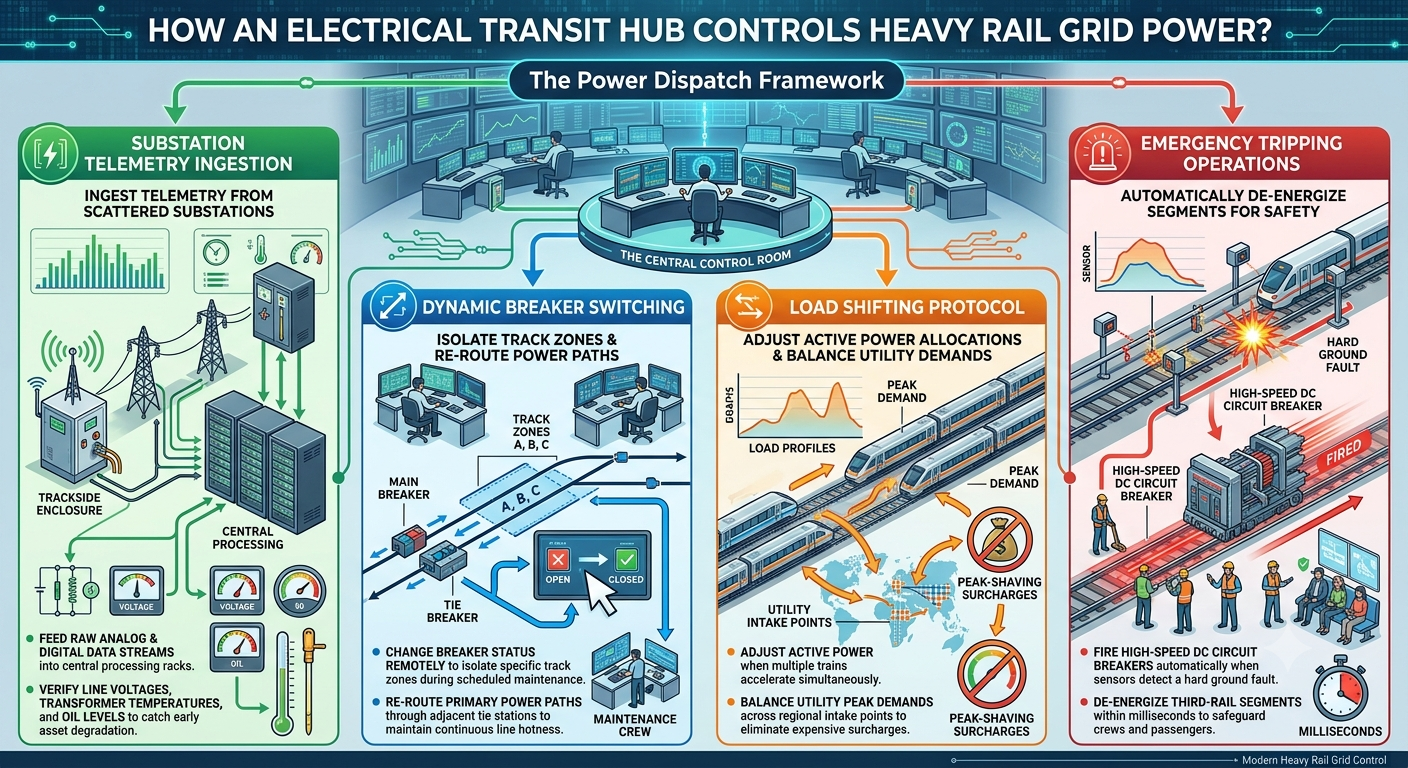
The facility functions by gathering instant telemetry from field substations, trackside switchgear, and utility interconnections to execute real-time power routing. Operators use specialized supervisory software to watch load profiles and change breaker states instantly.
The Power Dispatch Framework
- Substation Telemetry Ingestion
- Feed raw analog and digital data streams from scattered trackside enclosures directly into the central processing racks.
- Verify line voltages, transformer temperatures, and oil levels to catch early asset degradation.
- Dynamic Breaker Switching
- Change breaker status remotely to isolate specific track zones during scheduled trackside maintenance windows.
- Re-route primary power paths through adjacent tie stations to maintain continuous line hotness.
- Load Shifting Protocol
- Adjust active power allocations when multiple train sets accelerate out of the terminal simultaneously.
- Balance utility peak demands across separate regional intake points to eliminate expensive peak-shaving surcharges.
- Emergency Tripping Operations
- Fire high-speed dc circuit breakers automatically when trackside sensors detect a hard ground fault.
- De-energize third-rail segments within milliseconds to safeguard field crews and passengers.
GET IN TOUCH
The ultimate solution for reliable power control! call us at 276-285-3841
Why Can't Electrified Rail Systems Run Without Centralized Power Routing?
Rail systems depend on centralized control rooms because sudden voltage drops can instantly paralyze signaling logic, stall trains, and strand passengers. When thousands of commuters crowd the platforms during a wet northeast rush hour, a single unmanaged surge can burn out expensive trackside infrastructure.
Operational Stability
Managing a modern transit grid without a centralized desk leads to a dangerously fragmented network. If an underground substation overheats, field crews can't guess what the upstream breakers are doing. Centralization gives dispatchers the visibility to balance the load, drop unnecessary auxiliary draws, and keep the main lines running hot.
Real-Time Risk Control
- Instant Ground Fault Clearing: Stops localized traction arc-flashes from melting the copper overhead catenary assemblies.
- Integrated Emergency Disconnects: Provides a single point of absolute power cutoff for regional fire and rescue teams.
- Automated Load Shedding: Intercepts incoming utility sags before they trip out the main traction transformers.
What Do Operators Monitor Inside a Modern Rail Substation Hub?
Inside a modern facility, operators interact with massive digital mimic displays, automated alarm management software, and secure communication channels. This replaces old-school manual knife-switches with digital control loops.
The System Architecture
- SCADA Integration Layer: Links remote terminal units directly to the control desk for instant substation switching.
- Visual Mimic Panels: Displays the real-time electrical state of every foot of third rail across the territory.
- Diagnostic Alarm Panels: Flags out-of-bounds current spikes, breaker trips, and backup battery drop-offs instantly.
- VoIP Dispatch Desks: Connects the power director directly to train dispatchers and trackside maintenance workers.
How Are Safety and Redundancy Managed Across the Power Grid?
Safety is managed through heavy hardware isolation, independent backup battery banks, and hardened communication networks. These layers ensure that a failure in one section won't cause a total system blackout.
High-Voltage Protection Profiles
|
|
|
|
|
|
|
|
|
|
|
|
|
|
|
|
|
|
|
|
How Does a Power Control Center Lower Total Utility Costs?
The facility drives down total operational costs by actively managing peak power demands and capturing train energy feedback. Electrified transit systems draw vast amounts of power, making energy efficiency critical for operational budgets.
Efficiency Strategies
- Regenerative Braking Storage: Captures the kinetic energy of stopping trains and routes it to nearby accelerating vehicles.
- Off-Peak Charge Cycles: Charges local energy storage systems late at night when industrial utility rates drop.
- Transformer Optimization: Takes redundant substation units offline during low-demand night hours to eliminate core losses.
What Technologies Will Shape the Future of Rail Power Management?
Future rail control installations will integrate predictive AI diagnostics, cloud-linked telemetry, and automated fault recovery systems. This shifts grid operations from reactive troubleshooting to predictive maintenance.
Next-Generation Grid Upgrades
- Predictive Insulation Tracking: Monitors leakage currents on the third rail to spot failing insulators before they flash over.
- Automated Network Self-Healing: Uses smart algorithms to isolate faulted lines and restore power through clean paths without human intervention.
- Hardened Cyber Perimeter Protection: Protects the industrial SCADA network from external digital attacks.
Field Note: Preventing the Cascading Breaker Trip
In heavy rail electrification, the biggest danger is a cascading trip. When one substation drops off the line due to a localized short, its load immediately dumps onto adjacent units. If those neighboring stations are already running near capacity, they can trip out sequentially from the overload. Experienced operators know how to configure their high-speed breaker trip curves and use real-time load shedding to keep local track faults from knocking out the entire transit corridor.
GET IN TOUCH
The ultimate solution for reliable power control! call us at 276-285-3841
Putting Your Rail Power Infrastructure Strategy into Motion
Building out a rugged, code-compliant rail distribution setup demands battle-tested industrial equipment designed for harsh environments. Swartz Engineering builds the heavy-duty switchgear, portable substations, and integrated monitoring enclosures that keep high-voltage rail grids stable.
Let our team review your trackside distribution blueprints. Call Swartz Engineering to optimize your traction power station control room deployment today.
Frequently Asked Questions
Q: What does a power dispatcher do inside a rail system control room?
A: A power dispatcher monitors the real-time distribution of traction power, executes high-voltage breaker switching, coordinates line lockouts for track crews, and manages emergency de-energizations during trackside incidents.
Q: How does a rail SCADA system handle incoming data overloads?
A: The SCADA framework uses intelligent alarm filtering to prioritize critical system trips and breaker status changes, suppressing minor status updates to prevent operator distraction during grid emergencies.
Q: Why do rail substations require dedicated backup battery rooms?
A: Dedicated DC battery rooms provide independent emergency backup power to run protective relays, fire high-speed circuit breakers, and maintain communication loops if the main utility grid fails.
Q: What is regenerative braking in modern electrified rail networks?
A: Regenerative braking occurs when a train reverses its electric motors during deceleration, turning the vehicle into a generator that feeds power back into the catenary or third rail for adjacent trains to use.
Q: How do engineering firms optimize control room safety designs?
A: Engineers add physical blast walls, separate control wiring from high-voltage bays, integrate redundant fiber rings, and use arc-flash mitigation technology to protect operators and equipment from catastrophic system failures.
Products We Offer
Swartz Engineering strives to provide top-quality products to achieve our customer's needs. Our products include:
- Type 76 DC Relay
- Type 82 DC Relay
- Swartz Engineering’s Type 64 Ground Relay
- Type 32 Reverse Current Relay
- Type 150 DC
- CSM Shield Monitor
- Metal Oxide Surge Arrestors
- Transducers
- MVIS SL Slim-line Contactor
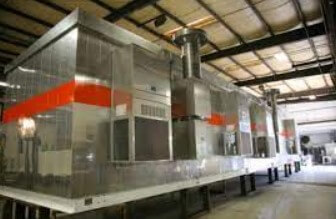
- Fully-tested Power Control Rooms
- Swartz Engineering’s Portable Substations
For nearly half a century, we have proudly led the industry in ensuring safety and efficiency. Swartz Engineering is a trusted family-owned company dedicated to providing top-notch power distribution solutions for the electrical industry. Contact us today