
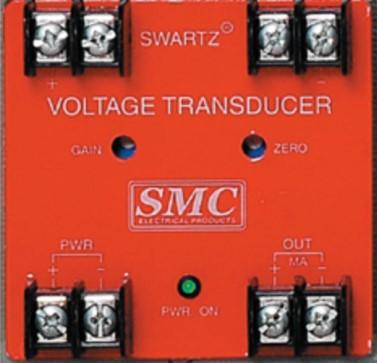
Modern transit power systems rely on bulletproof electrical measurements to keep traction current, substations, and control gear running safely. Knowing how does the transducer work in these high-voltage environments helps crew members protect sensitive SCADA equipment while keeping trains running on schedule.
Key Takeaways
- Convert high-voltage electrical inputs safely into proportional signals that control systems can read.
- Monitor real-time substation current, voltage, and watt consumption without running risky high-energy lines straight to sensitive computer gear.
- Isolate low-voltage control electronics from heavy electrical feedback, voltage spikes, and ground loops.
- Integrate solid-state transducers built specifically for rugged railway substations and SCADA monitoring networks.
What Is a Transducer in a Railway System?
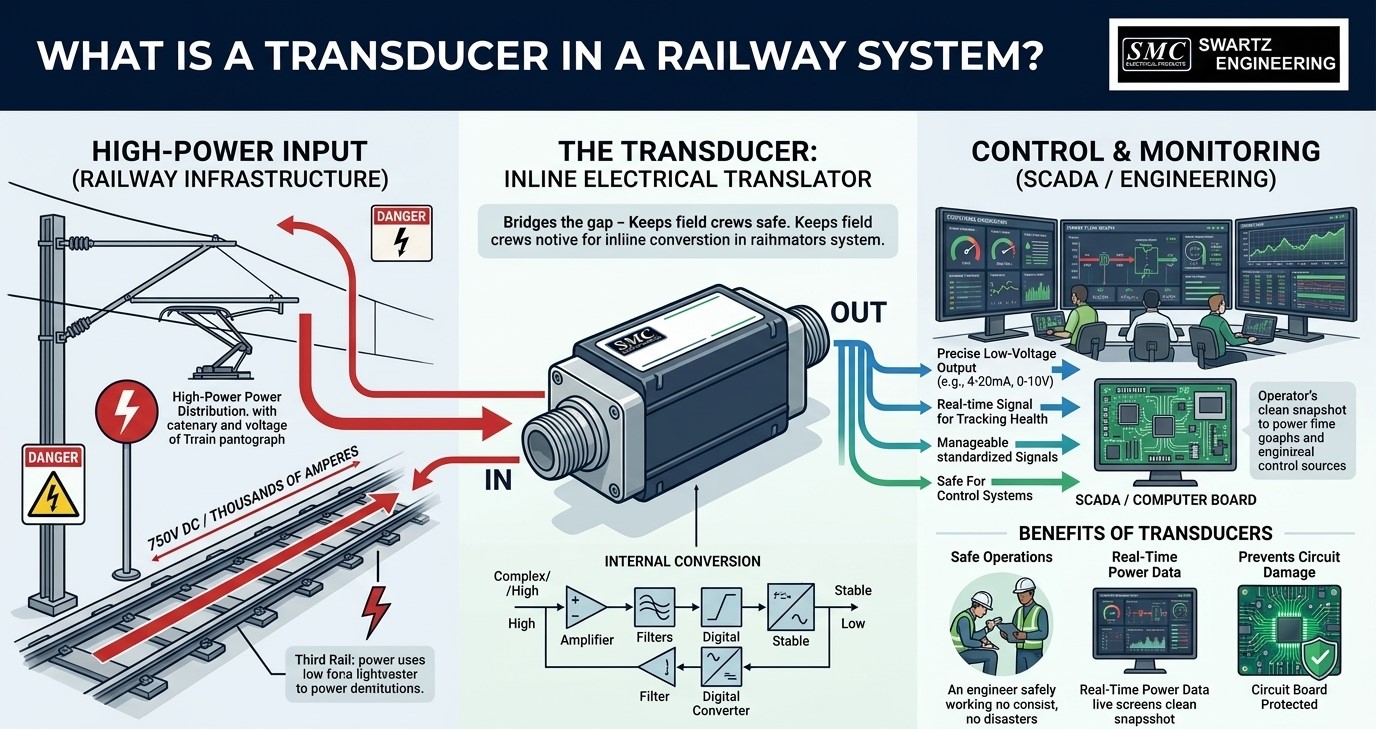
A transducer is an inline electrical translator that converts high-voltage current, voltage, or power signals into precise low-voltage outputs for control systems. High-energy rail lines carry thousands of amperes, but SCADA systems need small, stable signals to track system health safely. Transducers bridge that gap so engineers track power flow without blowing up sensitive circuit boards.
High-power third rails and overhead catenary lines carry brutal electrical loads. You cannot wire a 750V DC traction feeder straight into a computer control board without causing immediate disaster. Transducers take those high power readings and step them down to manageable, standardized signals. This keeps field crews safe and gives operators a clean, real-time snapshot of line conditions across the whole transit layout.
GET IN TOUCH
The ultimate solution for reliable power control! call us at 276-285-3841
How Does a Railway Transducer Measure and Convert Electrical Signals?
The process begins when a transducer measures raw electrical energy, converts it using solid-state components, and conditions the signal for SCADA networks. Internal circuitry steps down high voltage or heavy current, applies proper electrical isolation, and produces a proportional output.
Here is how the signal moves step-by-step through the circuit:
- Detect the Electrical Input
- Sample incoming traction current, line voltage, or total wattage directly at the feeder connection.
- Handle extreme surges and fluctuating loads typical in busy rail yards without burning out internal coils.
- Convert the Raw Signal
- Process the high-voltage energy using internal magnetic or solid-state components.
- Produce a clean, proportional bipolar current output that mirrors actual line fluctuations.
- Condition and Isolate Output
- Clean up signal noise and establish three-way isolation between the power supply, input, and output circuits.
- Prevent dangerous high-voltage spikes from jumping across into low-voltage SCADA gear.
- Transmit to Control Equipment
- Send the standardized measurement signal down the wire to central monitoring stations.
- Allow real-time tracking of line loads, voltage drops, and abnormal electrical faults.
What Types of Transducers Are Used in Railway Systems?
Railway substations use three primary transducer types to keep track of system health, with each device handling a specific electrical job:
- Current Transducers: Track the actual current flowing through traction lines and substation feeders to monitor motor loads and prevent overload trips.
- Voltage Transducers: Measure line voltage variations across third rails or catenaries, providing high-voltage input handling with clear bipolar outputs.
- Watt Transducers: Combine current and voltage data in high-voltage sections to calculate total electrical power consumption across distribution networks.
How Do Railway Transducers Compare to Traditional Measurement Tools?
|
|
|
|
|
|
|
|
|
|
|
|
|
|
|
|
|
|
|
|
What Key Features Make a Railway Transducer Reliable?
- Three-Way Electrical Isolation: Separates power supply, input, and output channels to block high-voltage feedback.
- High Bandwidth Capacity: Handles signal frequencies up to 1 kHz for quick detection of rapid voltage spikes.
- Bidirectional Operation: Tracks current flow accurately regardless of directional changes during regenerative braking.
- Over-Range Capability: Reads sudden power surges without clipping signals or saturating internal components.
- Gain and Zero Adjustments: Allows technicians to calibrate zero-points and intentional signal offsets quickly on-site.
Practical Tip for System Design
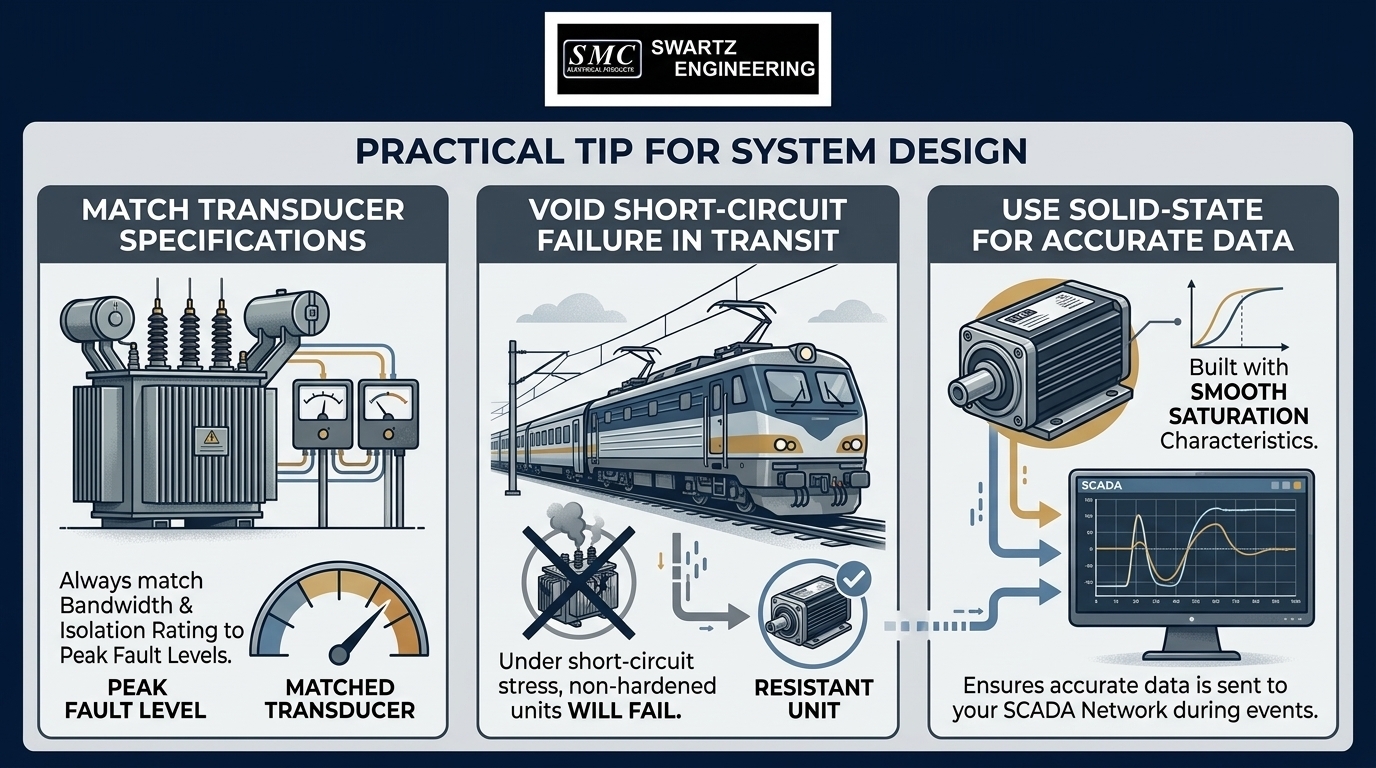
Always match your transducer's bandwidth and isolation rating to your substation's peak fault levels. In heavy transit environments, standard industrial units will fail under short-circuit stress. Using solid-state units built with smooth saturation characteristics ensures your SCADA network gets accurate data even during short circuits.
GET IN TOUCH
The ultimate solution for reliable power control! call us at 276-285-3841
Taking Action on Your Substation Measurement Setup
Selecting rugged power measurement gear keeps transit substations running smoothly while protecting expensive SCADA hardware. Solid-state transducers deliver dependable data across heavy-duty railway circuits.
Ready to upgrade your transit power monitoring infrastructure with field-proven hardware? To learn how does the transducer work inside your specific traction power layout, call Swartz Engineering to talk with a power specialist today.
Frequently Asked Questions
Q: What does a transducer do in a railway power system?
A: A transducer measures heavy current, voltage, or power and converts it into a safe, proportional output signal for control equipment.
Q: How does the transducer work alongside SCADA systems?
A: The transducer samples high-voltage line data, turns it into a low-power signal, and feeds that data directly to SCADA units for central tracking.
Q: Why is three-way isolation critical in transit substations?
A: Three-way isolation blocks high-voltage spikes from jumping between power inputs, outputs, and power supplies, protecting low-voltage gear.
Q: What is the difference between a current transducer and a watt transducer?
A: A current transducer measures amperage flow alone, while a watt transducer combines voltage and current data to calculate total power consumption.
Q: Can transducers withstand sudden rail line power surges?
A: Rugged railway transducers feature high over-range capability and smooth saturation characteristics to handle sudden energy spikes without breaking down.
Products We Offer
Swartz Engineering strives to provide top-quality products to achieve our customer's needs. Our products include:
- Type 76 DC Relay
- Type 82 DC Relay
- Swartz Engineering’s Type 64 Ground Relay
- Type 32 Reverse Current Relay
- Type 150 DC
- CSM Shield Monitor
- Metal Oxide Surge Arrestors
- Transducers
- MVIS SL Slim-line Contactor
- Fully-tested Power Control Rooms
- Swartz Engineering’s Portable Substations
For nearly half a century, we have proudly led the industry in ensuring safety and efficiency. Swartz Engineering is a trusted family-owned company dedicated to providing top-notch power distribution solutions for the electrical industry. Contact us today.