
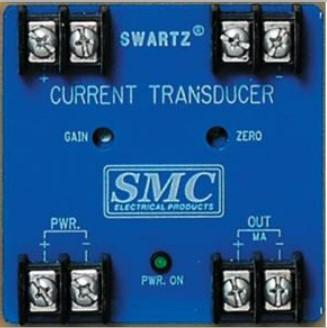
In the high-voltage world of rail electrification, you don't guess—you measure. Whether it’s a sprawling metro system or a heavy-haul freight corridor, the stability of your traction power substations depends on getting clean, actionable data from live conductors. Current transducers act as the critical interface, stripping away the danger of high-voltage surges to deliver precise signals that your SCADA systems can actually use. At Swartz Engineering, we’ve spent decades in the trenches of the U.S. transit industry, building the rugged, solid-state hardware that keeps the third rail hot and the trains moving.
Key Takeaways
- Signal Conversion: Translates massive primary currents into safe, low-voltage outputs for monitoring.
- System Protection: Prevents catastrophic equipment failure by identifying overloads before they cook your traction motors.
- SCADA Ready: Designed for seamless integration with modern digital control and data acquisition platforms.
- Built for Grit: Engineered to survive the vibration, temperature swings, and electromagnetic interference of rail environments.
What is the Role of Current Transducers in Modern Railway Systems?
Current transducers measure the magnetic field generated by current flowing through a conductor and convert it into a proportional, isolated signal. This allows your meters and relays to "see" what’s happening on a 2,000-amp line without being vaporized by the energy. In the context of a busy transit hub, these devices provide the literal pulse of the electrification network, ensuring every amp is accounted for.

CONTACT US
Take the first step towards powering up your operations! call us at 276-285-3841
Why is Current Monitoring Non-Negotiable for Train Electrification?
Railways are high-demand, high-stress environments where a single ground fault can paralyze a city. Without real-time monitoring, you are flying blind, risking expensive downtime and equipment damage. Current transducers provide the granular visibility needed to balance loads, protect signaling integrity, and ensure that traction power substations aren't being pushed past their thermal limits during peak commute hours.
The Strategic Framework: 4 Phases of Power Stability
- Inductive Detection:
- Capture the magnetic flux surrounding high-power busbars or cables.
- Maintain zero physical contact with high-voltage lines to ensure technician safety.
- Signal Conditioning:
- Filter out the "noise" and electromagnetic interference common in rail yards.
- Normalize the raw data into a standard 4-20mA or 0-10V output.
- Galvanic Isolation:
- Utilize three-way isolation to protect sensitive control electronics from surges.
- Prevent ground loops that can cause "ghost" readings in your SCADA software.
- Actionable Intelligence:
- Feed precise data to protection relays for instantaneous circuit tripping.
- Log historical energy usage to predict when a transformer is nearing the end of its life.
Operational Topic Clusters
- Traction Power: Monitoring the massive draws required for locomotive acceleration and regenerative braking.
- Signaling Safety: Ensuring that track occupancy detection systems aren't compromised by stray electrical currents.
- Infrastructure ROI: Using precision data to optimize energy consumption and reduce utility surcharges.
At-a-Glance: Traditional CTs vs. Swartz Solid-State Transducers
|
|
|
|
|
|
|
|
|
|
|
|
|
|
|
|
|
|
|
|
|
|
|
|

CONTACT US
Take the first step towards powering up your operations! call us at 276-285-3841
Critical Industry Entities & Definitions
- Traction Power Substation (TPSS): The "engine room" of the rail line, where utility power is converted for train use.
- SCADA Integration: The process of linking field hardware to a central "brain" for remote management.
- Bi-Directional Output: The ability to measure current flowing in both directions—essential for regenerative braking.
- Magnetic Link: A specialized design that eliminates the aging and drift common in cheaper, wound-core sensors.
Expert Perspective: The "Boots on the Ground" Reality
Most guys in the field think a transducer is just a fancy sensor until a surge hits. The reality? Cheaper units drift when the midday sun hits the enclosure, giving you false "overload" trips that shut down the line for no reason. We build our current transducers with high-range over-capability and magnetic link tech specifically so you aren't out there chasing ghost faults in the middle of a July heatwave.
Ready to Harden Your Rail Infrastructure?
When your reputation is on the line, you don't settle for "off-the-shelf" sensors that weren't built for the yard. Swartz Engineering delivers the rugged, high-precision current transducers that U.S. transit agencies trust to keep their systems energized and their passengers safe. From custom retrofits to new substation builds, we provide the hardware that turns raw power into reliable data. Schedule your technical consultation with Swartz Engineering today.
Frequently Asked Questions
What is the difference between a current transformer and a transducer?
A transformer simply steps down AC current, while a transducer converts that current into a standardized DC voltage or current signal that digital systems can read. Transducers also provide better accuracy and isolation across a wider range of frequencies.
Can these transducers handle bi-directional power?
Yes. Swartz Engineering designs bi-directional models that are perfect for systems utilizing regenerative braking, allowing you to track energy as it returns to the grid or stays within the traction network.
Where are these typically installed in a transit system?
You’ll find them mounted in traction power substations (TPSS), onboard the locomotives themselves for propulsion monitoring, and within signaling bungalows to ensure circuit integrity.
Do they require frequent recalibration?
Because of our solid-state, magnetic link design, these units experience minimal drift compared to traditional sensors. This makes them ideal for the "set it and forget it" requirements of long-term infrastructure.
Are Swartz Engineering products compliant with U.S. rail standards?
Absolutely. We design and manufacture our equipment right here in the U.S. to meet the rigorous safety and performance standards required by major transit authorities and freight operators nationwide.
Our Expert Services
Swartz Engineering provides top-quality products to achieve our customers' needs. We also make sure our products work reliably and safely. Our products include:
- Type 76 DC Relay
- Type 82 DC Relay
- Swartz Engineering’s Type 64 Ground Relay
- Type 32 Reverse Current Relay
- Type 150 DC
- CSM Shield Monitor
- Metal Oxide Surge Arrestors
- Transducers
- MVIS SL Slim-line Contactor
- Fully-tested Power Control Rooms
- Swartz Engineering’s Portable Substations
Contact Us
If you have a need for regular mobile power solutions, backups, or temporary power solutions, Swartz Engineering can deliver the crucial systems in a custom build for your needs. Contact us today to learn more about our mobile substation designs.
CONTACT US
Take the first step towards powering up your operations! call us at 276-285-3841