
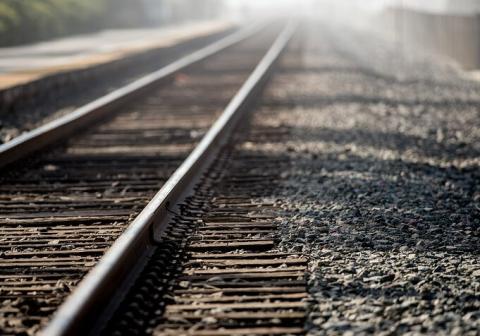
Railway power systems run across miles of exposed track, feeding heavy current into trains, signals, and control gear. When lightning hits or line breakers slam shut, sudden electrical spikes hit the line fast. Installing a heavy-duty DC surge arrester stops those high-voltage spikes from cooking expensive traction gear by diverting destructive energy safely to earth.
Key Takeaways
- Limits High Voltage: Clamps line spikes instantly to keep operating voltage within safe limits.
- Metal Oxide Design: Employs zinc-oxide varistors that react in nanoseconds without arc gaps.
- Flexible Placement: Installs on catenaries, substations, third rails, and vehicle roofs.
- Reduces Downtime: Prevents blown rectifiers, fried signaling units, and costly train delays.
Why Are Railway Lines Sitting Targets for Voltage Spikes?
Exposed track networks and high-power switching gear make transit lines prime targets for massive voltage surges. Direct strikes, breaker trips, and induced magnetic fields dump extra energy onto power lines. Sensitive track electronics cannot survive these sudden spikes without protection.
The reality on the ground is that transit lines act like giant antennas stretched across the landscape. When a storm rolls through, that raw power finds any path it can.
- Direct Lightning Strikes: Channel millions of volts directly into catenary wires or track rails.
- Equipment Switching: Generate heavy inductive kickback when high-energy breakers open under load.
- System Line Faults: Create violent voltage swings that travel down the line to hit connected gear.
- Induced Voltage: Couples unwanted current into nearby signal cables during heavy load shifts.
How Does a DC Surge Arrester Handle High-Voltage Spikes?
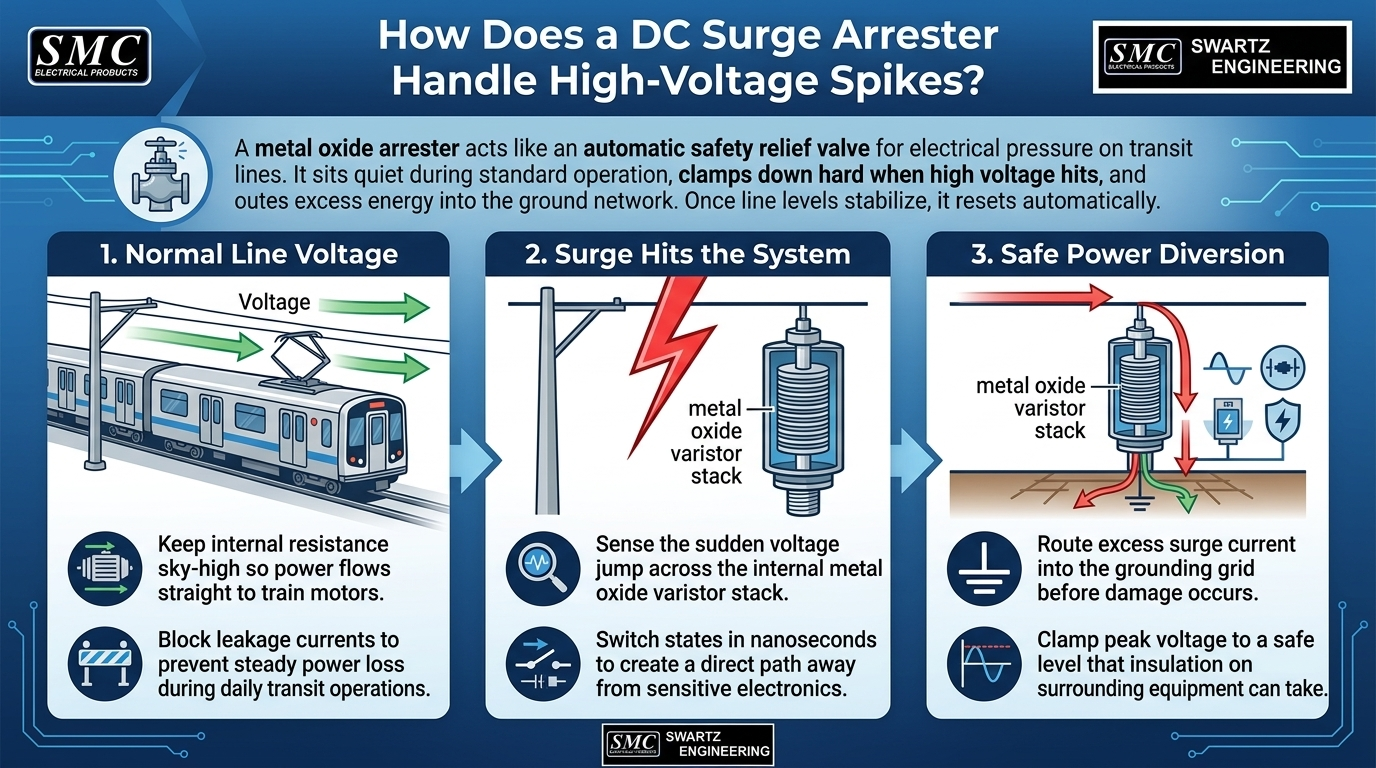
A metal oxide arrester acts like an automatic safety relief valve for electrical pressure on transit lines. It sits quiet during standard operation, clamps down hard when high voltage hits, and routes excess energy into the ground network. Once line levels stabilize, it resets automatically.
- Normal Line Voltage
- Keep internal resistance sky-high so power flows straight to train motors.
- Block leakage currents to prevent steady power loss during daily transit operations.
- Surge Hits the System
- Sense the sudden voltage jump across the internal metal oxide varistor stack.
- Switch states in nanoseconds to create a direct path away from sensitive electronics.
- Safe Power Diversion
- Route excess surge current into the grounding grid before damage occurs.
- Clamp peak voltage to a safe level that insulation on surrounding equipment can take.
GET IN TOUCH
The ultimate solution for reliable power control! call us at 276-285-3841
Where Should You Install Surge Arresters Across a Transit System?
Substations & Conversion Gear: Mount units right at the DC output of rectifiers to block transients before they hit main feeder buses.
Track Infrastructure: Secure protection on catenary poles, third-rail inputs, and feeder lines to catch incoming weather strikes early.
Rolling Stock Gear: Position heavy-duty arresters on train roofs and under-car power boxes to shield onboard motor drives and cab electronics.
Equipment Choice Comparison
|
|
|
|
|
|
|
|
|
|
|
|
|
|
|
|
|
|
|
|
Key Parts in Heavy Duty Power Protection
- Maximum Continuous Operating Voltage (MCOV): Defines the highest steady-state DC voltage the unit can handle continuously without degrading.
- Metal Oxide Varistor (MOV): Uses ceramic zinc-oxide grains to change electrical resistance instantly when voltage surges.
- Track Feeder Cable: Carries main DC power from the substation building out to catenary wires or third rails.
- Grounding Electrode System: Provides a low-resistance earth path to dump heavy surge currents harmlessly into the soil.
Real-World Advice for Field Engineers
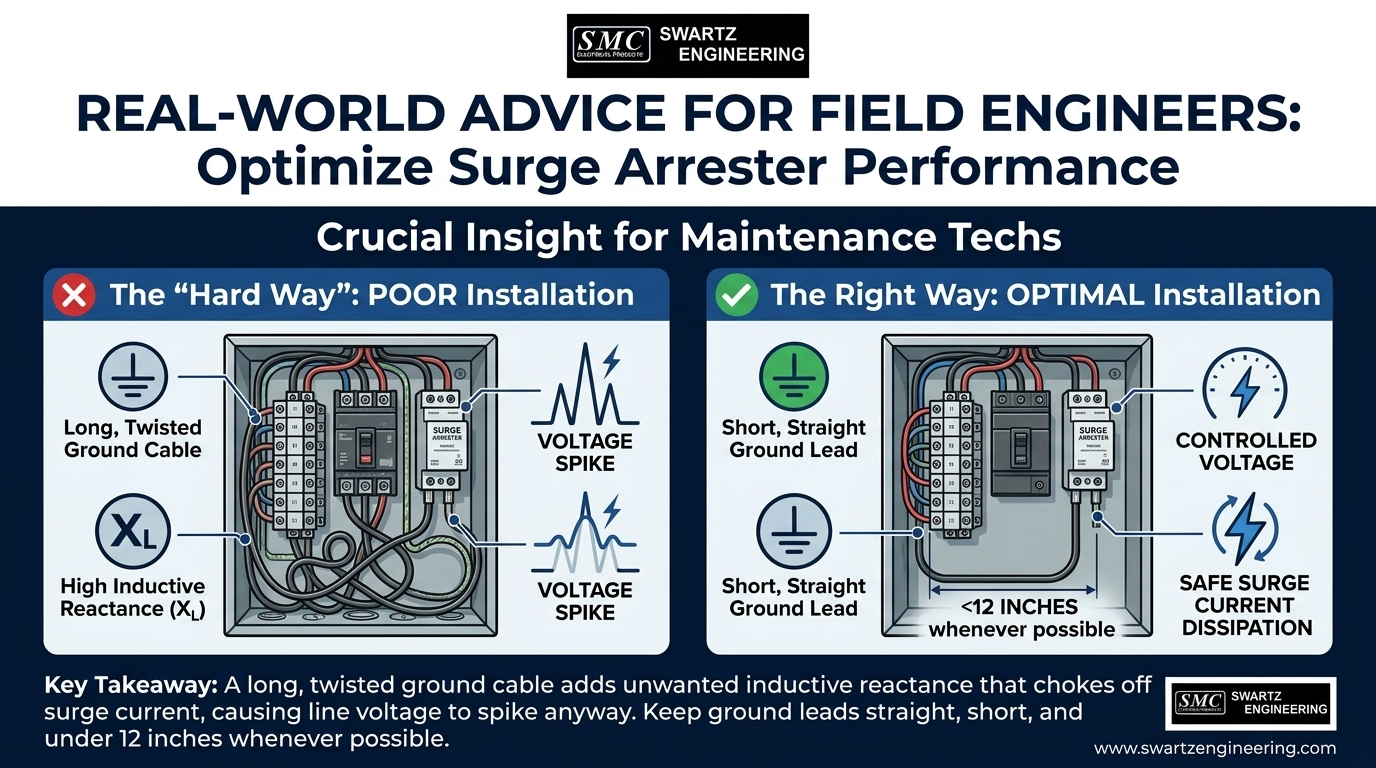
Here is the part most maintenance techs learn the hard way: your arrester is only as good as its ground wire. A long, twisted ground cable adds inductive reactance that chokes off surge current, causing line voltage to spike anyway. Keep ground leads straight, short, and under 12 inches whenever possible.
GET IN TOUCH
The ultimate solution for reliable power control! call us at 276-285-3841
Ready to Strengthen Your Transit Power System?
Protecting track infrastructure takes more than off-the-shelf components. Swartz Engineering builds heavy-duty DC surge arrester units, relays, and switchgear tailored for tough transit environments. Protect your equipment and cut unscheduled downtime today.
Explore custom DC protection options by visiting Swartz Engineering online or call our power engineers directly to review your system requirements.
Frequently Asked Questions
Q: What does a DC surge arrester do on a rail system?
A: It limits dangerous voltage spikes and redirects destructive surge currents to earth before they burn out rectifiers, signals, or train electronics.
Q: Where are surge arresters mounted along the line?
A: Units mount at DC substations, rectifiers, feeder lines, catenary poles, third rails, and directly on rail vehicle roofs.
Q: Can surge arresters protect sensitive signaling gear?
A: Yes, they shield low-voltage signal lines and control electronics connected to the primary DC power feed.
Q: How do engineers pick the right arrester size?
A: Selection relies on continuous operating voltage (MCOV), expected surge currents, grounding layout, and local site conditions.
Q: Why should you mount an arrester close to equipment?
A: Short connecting leads minimize wire inductance, letting the arrester react faster and keep peak voltage lower.
Products We Offer
Swartz Engineering strives to provide top-quality products to achieve our customer's needs. Our products include:
- Type 76 DC Relay
- Type 82 DC Relay
- Swartz Engineering’s Type 64 Ground Relay
- Type 32 Reverse Current Relay
- Type 150 DC
- CSM Shield Monitor
- Metal Oxide Surge Arrestors
- Transducers
- MVIS SL Slim-line Contactor
- Fully-tested Power Control Rooms
- Swartz Engineering’s Portable Substations
For nearly half a century, we have proudly led the industry in ensuring safety and efficiency. Swartz Engineering is a trusted family-owned company dedicated to providing top-notch power distribution solutions for the electrical industry. Contact us today.