
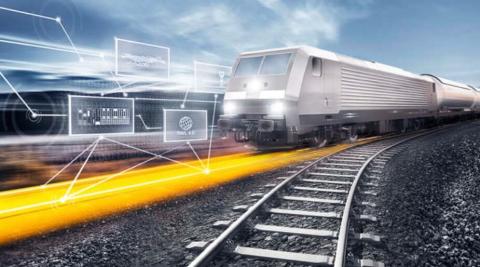
Railway networks rely on dependable electrical infrastructure to keep passenger cars and heavy freight rolling smoothly on schedule. At the core of this trackside infrastructure sit heavy-duty DC distribution systems, delivering continuous direct current to essential signaling gear, wayside communication networks, traction substations, SCADA automation setups, protective relays, and switchgear. When an electrical fault hits these systems, field crews face everything from sudden track delays to severe physical downtime and safety hazards across the line. Understanding how these field failures start helps rail crews prevent sudden power loss, slash maintenance overhead, and build long-term track reliability.
At Swartz Engineering, we build hardware meant for the real-world demands of rail corridors across the United States. Our field-tested teams design rugged power distribution solutions that keep mainlines, yards, and municipal transit routes operating cleanly under tough conditions.
Key Takeaways
- Essential Power Backbone: Direct current infrastructure feeds vital trackside signaling, radio comms, substation controls, and switchgear.
- Frequent Point Failures: System line drops, dead battery banks, field terminal rust, and skipped maintenance checks account for most track shutdowns.
- Proactive System Upgrades: Routine thermal imaging and continuous line monitoring stop sudden field equipment burnouts.
- Precise Cable Sizing: Proper electrical engineering eliminates heavy voltage drops across long right-of-way wire runs.
- Swartz Engineering Expertise: Field-ready power switchgear and custom transit cabinets ensure rail lines stay fully energized.
Why Are DC Distribution Systems Critical for Railway Operations?
Direct current power networks serve as the primary electrical backbone for mission-critical railway equipment that cannot afford a single second of alternating current interruption. Modern transit lines and class-I railroads rely on DC distribution systems to feed steady voltage directly into sensitive trackside electronics, train control cabinets, and auxiliary switchgear setups across hundreds of miles of open track.
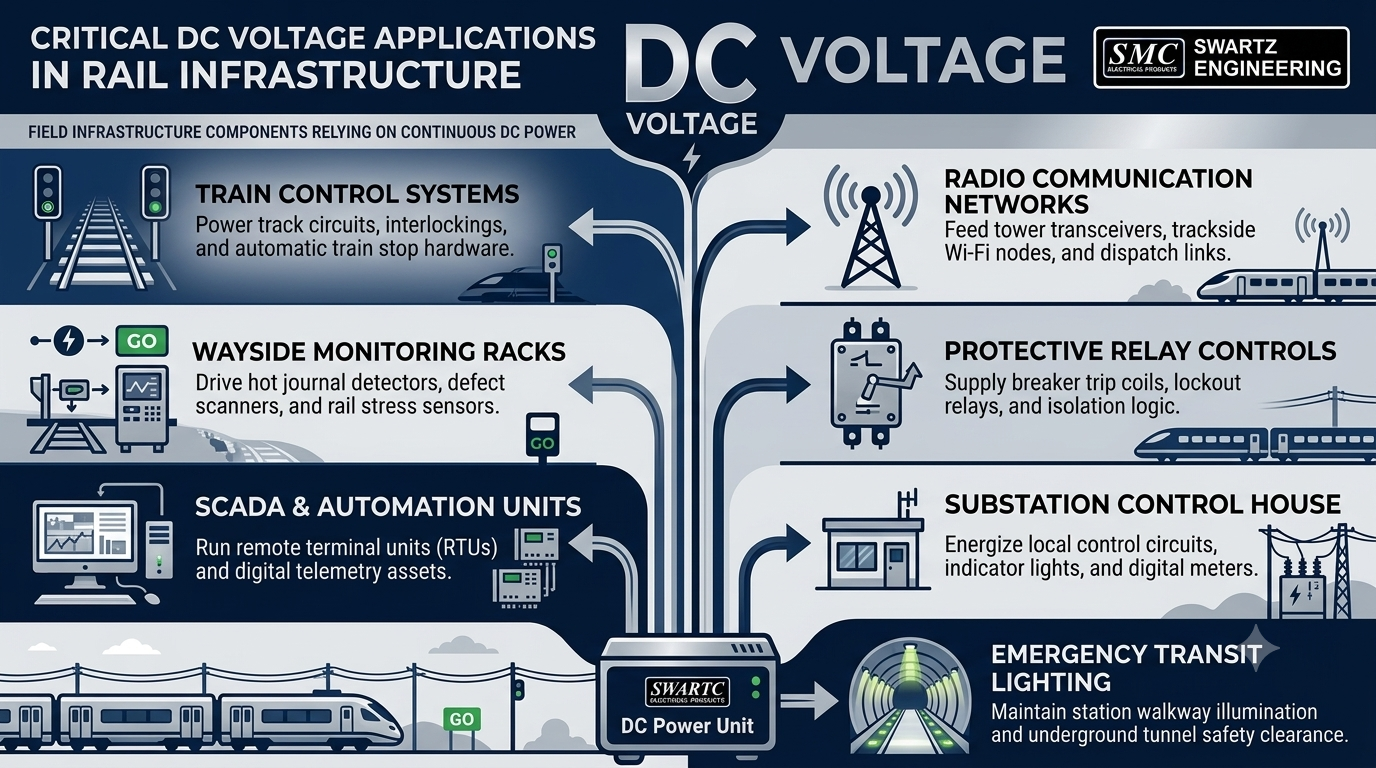
Field infrastructure components relying on continuous DC voltage include:
- Train Control Systems: Power track circuits, interlockings, and automatic train stop hardware.
- Radio Communication Networks: Feed tower transceivers, trackside Wi-Fi nodes, and dispatch links.
- Wayside Monitoring Racks: Drive hot journal detectors, defect scanners, and rail stress sensors.
- Protective Relay Controls: Supply breaker trip coils, lockout relays, and isolation logic.
- SCADA & Automation Units: Run remote terminal units (RTUs) and digital telemetry assets.
- Substation Control House: Energize local control circuits, indicator lights, and digital meters.
- Emergency Transit Lighting: Maintain station walkway illumination and underground tunnel safety clearance.
Unlike utility AC lines that fluctuate, DC setups supply ultra-stable power without frequency variance. The reality on the ground is simple: DC busbars integrate directly with station battery banks, guaranteeing instant failover protection whenever utility grids crash.
GET IN TOUCH
The ultimate solution for reliable power control! call us at 276-285-3841
What Causes Voltage Drops in Railway DC Distribution Systems?
Natural conductor resistance over long rail runs causes steady voltage drops that starve trackside electronics of operational power. When direct current travels through long copper or aluminum conductors along the right-of-way, internal electrical resistance converts voltage directly into lost heat energy before reaching the load terminal.
Field technicians frequently trace line losses back to specific physical flaws:
- Excessively Long Cable Runs: Pushing power thousands of feet from the nearest substation without boosting line levels.
- Undersized Line Conductors: Installing wire gauges incapable of carrying current surges without heavy heating losses.
- Corroded Terminal Lug Pins: Allowing road salt, dirt, and moisture to build up high resistance layers on copper pads.
- Unbalanced Load Expansions: Tying modern digital gear onto legacy copper lines never engineered for added amperage.
Here is the part most technicians won't tell you: an unaddressed 10% line drop will freeze delicate relay contacts or cause erratic false-occupancy signals on track blocks. Proper field engineering requires calculated conductor cross-sections, short cable runs, and tight terminal torque specifications right from the start.
How Do Environmental Conditions Damage Railway Electrical Equipment?
Unprotected outdoor cabinets expose sensitive busbars, relays, and power supplies to severe weather, track vibration, and conductive dust accumulation. Trackside enclosures operate under harsh ambient shifts, where daily temperature swings draw humid air into sealed boxes, causing hidden condensation traps.
Environmental hazards hit trackside hardware in distinct ways:
- Corroded Power Busbars: Damp air reacts with copper bars, generating green oxidation that acts as an insulator.
- Vibration Loose Screws: Heavy freight train passes shake cabinet terminal blocks until wires back out and arc.
- Conductive Dust Layers: Brake dust and metallic ballast fines settle on circuit boards, causing dead shorts.
- Gasket Rubber Rot: Sun exposure degrades enclosure door seals, letting driving rain splash straight onto active relays.
Installing stainless steel NEMA 4X enclosures, heavy shock-mount hardware, and internal cabinet heaters prevents moisture buildup and protects trackside gear year-round.
Why Do Battery Backup Systems Often Become Weak Points?
Station battery banks fail when hidden sulfation, dry cells, or thermal stress destroy capacity without showing visible physical damage. While backup batteries sit quietly in float charge mode inside control houses, internal plates deteriorate over time, leaving system operators with a false sense of security.
Common battery failures seen in the field include:
- Plate Sulfation: Leaving lead-acid cells at partial charge forms hard lead sulfate crystals that block power flow.
- Thermal Runaway: High ambient heat bakes cell electrolyte, causing battery cases to swell, crack, and fail completely.
- Terminal Post Oxidation: Battery acid fumes leach past seals, corroding lead posts into high-resistance connections.
- Improper Float Voltages: Overcharging boils water out of wet cells, while undercharging invites permanent capacity loss.
Field maintenance teams must look past simple visual checks. Routine load testing, cell resistance checks, and automatic battery monitoring systems reveal weak jars long before a power outage hits the line.
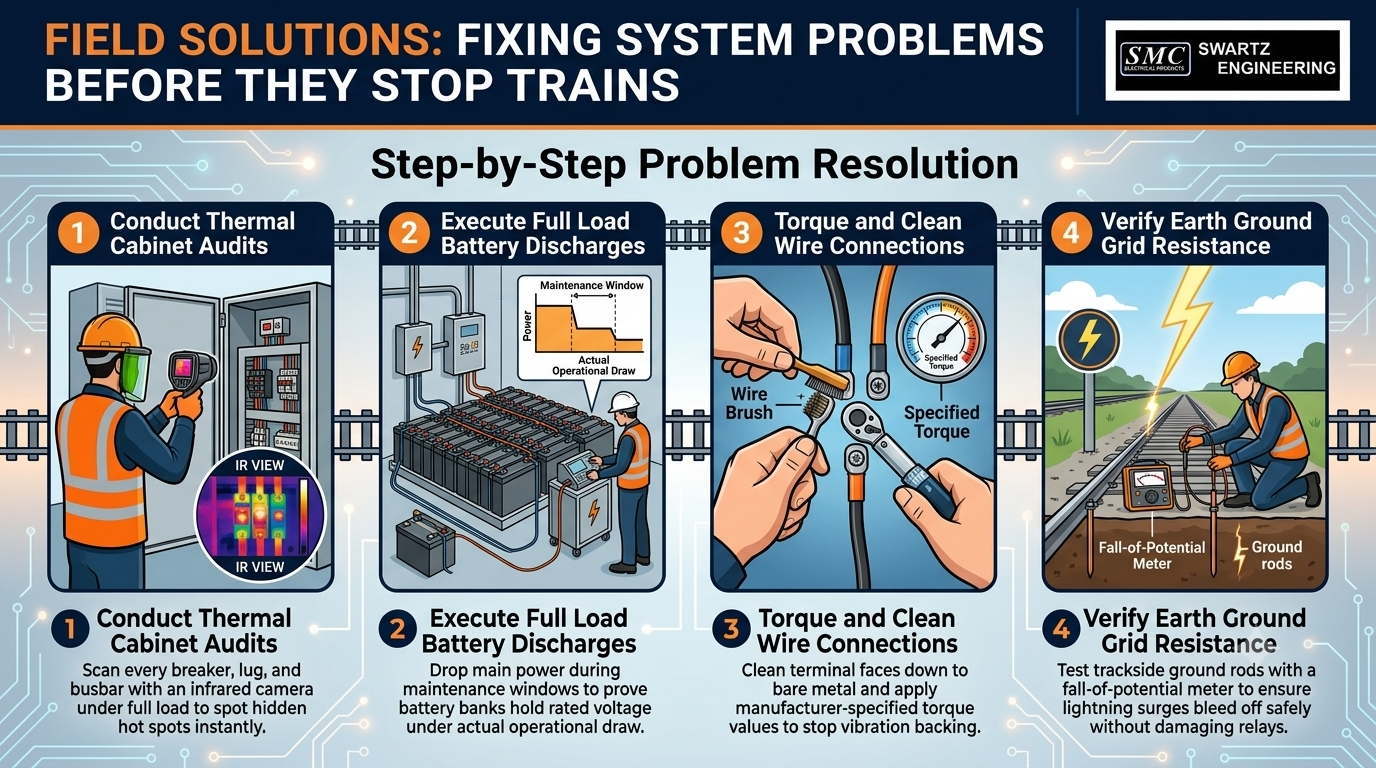
Field Solutions: Fixing System Problems Before They Stop Trains
Step-by-Step Problem Resolution
- Conduct Thermal Cabinet Audits: Scan every breaker, lug, and busbar with an infrared camera under full load to spot hidden hot spots instantly.
- Execute Full Load Battery Discharges: Drop main power during maintenance windows to prove battery banks hold rated voltage under actual operational draw.
- Torque and Clean Wire Connections: Clean terminal faces down to bare metal and apply manufacturer-specified torque values to stop vibration backing.
- Verify Earth Ground Grid Resistance: Test trackside ground rods with a fall-of-potential meter to ensure lightning surges bleed off safely without damaging relays.
GET IN TOUCH
The ultimate solution for reliable power control! call us at 276-285-3841
Railway Power System Health Checklist
|
|
|
|
|
|
|
|
|
|
|
|
|
|
|
|
|
|
|
|
|
|
|
|
|
|
|
|
|
|
Core Technical Terms for Track Power Systems
- Rectifier Substation: A trackside facility housing heavy transformers and diode banks that convert high-voltage utility AC into smooth DC.
- Negative Return Rail: The running rail used to carry return direct current back to the substation busbar, completing the circuit.
- Float Charging: Supplying continuous micro-current to station batteries to keep them at 100% readiness without boiling away electrolyte.
- Contact Resistance: The electrical resistance occurring across physical connections like bolted lugs, switch jaws, or relay contacts.
- Stray Current Corrosion: Direct current leaking off rails into moist earth, eating away underground utility pipes and steel bridge rebar.
Real-World Field Advice
"Here's what most field manuals miss: visual inspections on DC equipment lie to you. A copper lug can look brand-new on top while hiding an oxidized layer underneath that drops 3 volts across the joint. If you aren't pulling out an infrared camera during peak load or putting a wrench to terminal bolts, you're just waiting for a red-signal failure on the main line."
How to Protect Your System Step-by-Step
- Map Real-World Voltage Levels: Record actual voltage readings under full equipment loads at the furthest trackside cabinet.
- Tighten Protection Enclosures: Replace damaged gaskets, clean dust build-up, and seal conduit entrances against moisture penetration.
- Install Automated Health Sensors: Add continuous line monitoring and automatic battery diagnostics to report early faults directly to SCADA dispatch.
Keep Your Track Infrastructure Running Strong
Reliable DC distribution systems form the foundation for safe, on-time rail operations across the country. Addressing line drops, damp enclosures, battery wear, and terminal oxidation before they trigger delays saves time and protects valuable rail assets. Partnering with an experienced rail power engineering group ensures your hardware handles tough trackside conditions year after year.
At Swartz Engineering, we build custom power switchgear, rectifier cabinets, and wayside distribution gear tailored to your exact transit or freight requirements. Our team works directly with rail operators to upgrade legacy line hardware, design new substation feeds, and eliminate unexpected outages. Contact our engineering team today to review your electrical infrastructure and keep your lines running reliably.
Frequently Asked Questions
Q: What are DC distribution systems in modern railway operations?
A: DC distribution systems are low-to-medium voltage power networks that feed direct current from substations directly to trackside signals, switch machines, radios, control relays, and emergency backup gear.
Q: What causes severe voltage drops on wayside electrical lines?
A: Long cable runs, undersized copper conductors, loose lug connections, corroded terminal screws, and adding extra electrical hardware onto older lines without upgrading supply wires all create line drops.
Q: How frequently should crews inspect trackside distribution gear?
A: Field crews should perform visual and thermal inspections every six months, with full battery load tests and terminal torque verifications scheduled at least once a year.
Q: Why do battery backup banks fail when main power cuts out?
A: Batteries deteriorate internally due to plate sulfation, dry electrolyte, extreme heat, or incorrect charger voltages, which reduces their actual current capacity despite looking normal on a charger meter.
Q: How can rail operators stop environmental damage to trackside electronics?
A: Use sealed NEMA 4X stainless enclosures, install internal cabinet space heaters to stop condensation, replace degraded rubber seals, and routinely blow out conductive dust accumulations.
Products We Offer
Swartz Engineering strives to provide top-quality products to achieve our customer's needs. Our products include:
- Type 76 DC Relay
- Type 82 DC Relay
- Swartz Engineering’s Type 64 Ground Relay
- Type 32 Reverse Current Relay
- Type 150 DC
- CSM Shield Monitor
- Metal Oxide Surge Arrestors
- Transducers
- MVIS SL Slim-line Contactor
- Fully-tested Power Control Rooms
- Swartz Engineering’s Portable Substations
For nearly half a century, we have proudly led the industry in ensuring safety and efficiency. Swartz Engineering is a trusted family-owned company dedicated to providing top-notch power distribution solutions for the electrical industry. Contact us today.