
Railway electrification isn't just about moving juice from point A to point B; it’s about managing massive, volatile loads that can fry a substation in a heartbeat if your protection isn't hair-trigger fast. At Swartz Engineering, we've seen what happens when a DC overcurrent relay fails to bite—you're looking at melted traction motors, charred cables, and a transit line that's dead in the water. In the high-stakes world of heavy rail and metro transit, "good enough" protection is a recipe for a catastrophic arc flash.
Key Takeaways
- Rapid Fault Response: High-speed detection is the only thing standing between a minor trip and a permanent equipment failure.
- Arc Mitigation: Unlike AC, DC current doesn't have a natural zero-crossing, making arcs notoriously difficult to kill.
- System Integrity: Proper relay coordination ensures that a localized fault doesn't snowball into a regional blackout.
- Modern Integration: Smart relays now feed data directly into SCADA systems for real-time health monitoring.
What Is The Specific Role Of A DC Overcurrent Relay In Modern Rail?
The DC overcurrent relay acts as the "brain" of the traction power substation, continuously policing current levels to prevent equipment destruction. By comparing real-time flow against strict safety thresholds, it commands circuit breakers to snap open the moment a short circuit or thermal overload is detected. This immediate action isolates high-energy faults before they can propagate through the third rail or catenary system.
The Strategic Framework: Traction Power Protection
- Continuous Sensing: Shunts or Hall-effect sensors feed real-time amperage data to the relay logic.
- Monitor load fluctuations during heavy train acceleration.
- Filter out electromagnetic interference from the track environment.
- Threshold Analysis: The system distinguishes between a normal "in-rush" current and a genuine fault.
- Calculate the rate of rise ($di/dt$) to identify "soft" shorts.
- Execute time-delay curves for coordinated downstream protection.
- Command Execution: The relay sends a high-speed trip signal to the DC circuit breaker.
- Force mechanical separation in under 20 milliseconds.
- Initiate arc-quenching protocols to protect switchgear internals.

CONTACT US
Take the first step towards powering up your operations! call us at 276-285-3841
Why Does DC Fault Protection Require A Different Approach Than AC?
DC systems lack the natural 60Hz zero-crossing found in AC, meaning electricity doesn't "take a break" to let you extinguish an arc. Because the current is constant, a DC overcurrent relay must be paired with specialized high-speed breakers that can mechanically force an air gap and blow the arc into a chute. Without this aggressive intervention, a DC fault will sustain itself until the hardware literally melts away.
Technical Guardrails
- Arc Persistence: DC arcs are violent and self-sustaining; they require magnetic blowouts to extinguish.
- Voltage Stability: 750V to 3kV systems experience massive voltage drops during faults, complicating detection.
- Regenerative Braking: Modern trains pump power back into the rail, creating "ghost" loads that confuse standard sensors.
At-a-Glance: AC vs. DC Protection Realities
|
|
|
|
|
|
|
|
|
|
|
|
|
|
|
|
|
|
|
|
How Does Relay Coordination Prevent System-Wide Outages?
Coordination is the art of "selective tripping," ensuring that only the specific section of track with a fault goes dark. By fine-tuning the DC overcurrent relay settings, engineers can ensure that a train-level fault trips the on-board breaker before it takes down the entire substation. This "layered" defense keeps the rest of the line running while the problem child is isolated for repairs.
Industry Entities & Grounding
- Traction Power Substation (TPSS): The localized powerhouse where high-voltage AC is rectified to DC for rail use.
- SCADA Integration: The digital "nervous system" that allows operators to reset relays from a central command center.
- $di/dt$ Protection: A specialized sensing method that detects faults based on how fast the current increases, rather than just the total amount.
Expert Perspective: The "Boots on the Ground" Reality
Most guys think setting a relay is just about the "trip point." They’re wrong. In the field, the real enemy is nuisance tripping. If you set your relay too tight, every time a 10-car consist hits a steep grade in the Philadelphia heat, the breaker pops. You need a relay with a sophisticated "time-overcurrent" curve that understands the difference between a train working hard and a dead short.
CONTACT US
Take the first step towards powering up your operations! call us at 276-285-3841
Putting Your Infrastructure Strategy into Motion
Maintaining a reliable rail network requires more than just heavy steel; it requires an electrical defense that doesn't blink. At Swartz Engineering, we don't just sell parts—we engineer the resilience of your entire power distribution network. Whether you are retrofitting a legacy metro line or building out a new light-rail extension, the precision of your protection logic is the difference between a 15-minute delay and a multi-million dollar repair bill.
Ready to harden your traction power system? Call now to discuss how a custom DC overcurrent relay solution can secure your operations.
Frequently Asked Questions
Q: What is the standard response time for a DC relay?
A: In high-voltage railway applications, a relay typically detects a fault and sends a trip signal in under 10 to 50 milliseconds. This speed is vital to stop the massive thermal energy of a DC arc before it destroys the surrounding switchgear components.
Q: Can these relays handle regenerative braking power?
A: Yes. Modern digital relays are programmed to recognize bidirectional power flow. This allows the system to distinguish between a train feeding energy back into the third rail during braking and an actual overcurrent fault condition occurring elsewhere on the line.
Q: Why is monitoring important for rail?
A: Because rail lines are long, a fault at the far end of a circuit might not draw enough total current to trigger a standard "instantaneous" trip. However, the speed at which the current rises is always unique during a fault, allowing the relay to catch the problem early.
Q: Does Swartz Engineering provide custom relay enclosures?
A: Absolutely. We specialize in ruggedized, portable, and stationary substation solutions. Our engineering team builds the entire protection suite—including the relay, the breakers, and the monitoring hardware—to meet the specific environmental demands of your location.
Q: How often should these protection systems be tested?
A: Industry best practices suggest primary and secondary injection testing every 2 to 5 years, depending on the environment. High-vibration or high-humidity areas, like coastal transit lines, often require more frequent inspections to ensure the mechanical components of the trip circuit haven't seized.
Products We Offer
Swartz Engineering strives to provide top-quality products to achieve our customer's needs. Our products include:
- Type 76 DC Relay
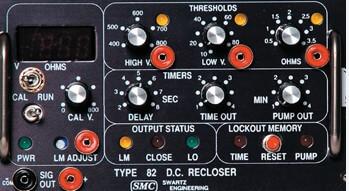
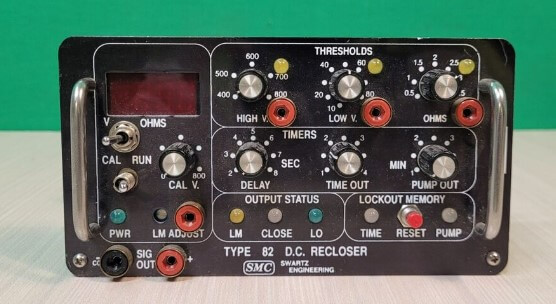
- Type 82 DC Relay
- Swartz Engineering’s Type 64 Ground Relay
- Type 32 Reverse Current Relay
- Type 150 DC
- CSM Shield Monitor
- Metal Oxide Surge Arrestors
- Transducers
- MVIS SL Slim-line Contactor
- Fully-tested Power Control Rooms
- Swartz Engineering’s Portable Substations
For nearly half a century, we have proudly led the industry in ensuring safety and efficiency. Swartz Engineering is a trusted family-owned company dedicated to providing top-notch power distribution solutions for the electrical industry. Contact us today.