
Railways stand as one of the most punishing, uncompromising transportation environments across the American landscape, shifting millions of daily commuters and millions of tons of industrial freight. Beneath the steel tracks and roaring engines lies a complex web of high-voltage electrical infrastructure that makes the entire operation possible. These critical distribution systems funnel high-voltage electricity directly into pulling locomotives, complex wayside signaling equipment, trackside communication shacks, maintenance bays, and passenger stations to maintain safe, predictable transit schedules. At Swartz Engineering, we architect custom, heavy-duty electrical systems that help commercial rail operators across the United States run flawlessly while preparing their infrastructure for future line expansions.
Key Takeaways
- Heavy-duty electrical infrastructure channels continuous utility power directly to every safety-critical and mechanical system along the alignment.
- Eliminating voltage dips and transient surges mitigates unexpected line delays, sudden equipment dropouts, and catastrophic safety liabilities.
- Rail corridors require unwavering electrical continuity to manage locomotive traction, track-circuit signaling, automated dispatch networks, and facility operations.
- Specializing in application-specific engineering hardens trackside systems against premature wear, trims operations budgets, and simplifies future track extensions.
- Swartz Engineering manufactures rugged, field-tested power systems built specifically to endure the intense mechanical stresses of American transit networks.
What Are Power Distribution Networks in Modern Railway Environments?
Power distribution networks are highly specialized industrial electrical configurations designed to route high-voltage utility power down to substations and step-it down safely for individual transit systems. The reality on the ground is that these networks are the literal lifelines for locomotives, critical line signaling, fiber shacks, maintenance yards, and commuter platforms.
Unlike the standard commercial panels you find in typical office parks, rail-side power networks are subjected to brutal, non-stop operational stress. They are physically built from the ground up to absorb massive harmonic distortion, extreme load swings as massive trains accelerate, relentless ground vibrations, and harsh environmental abuse without dropping a single volt. When these specialized power distribution networks experience component degradation or poor engineering configuration, the entire rail corridor suffers from cascading signal failures, localized dark territory, broken commuter schedules, and millions of dollars in idle freight losses.
Why Does Absolute Electrical Continuity Matter Along Rail Corridors?
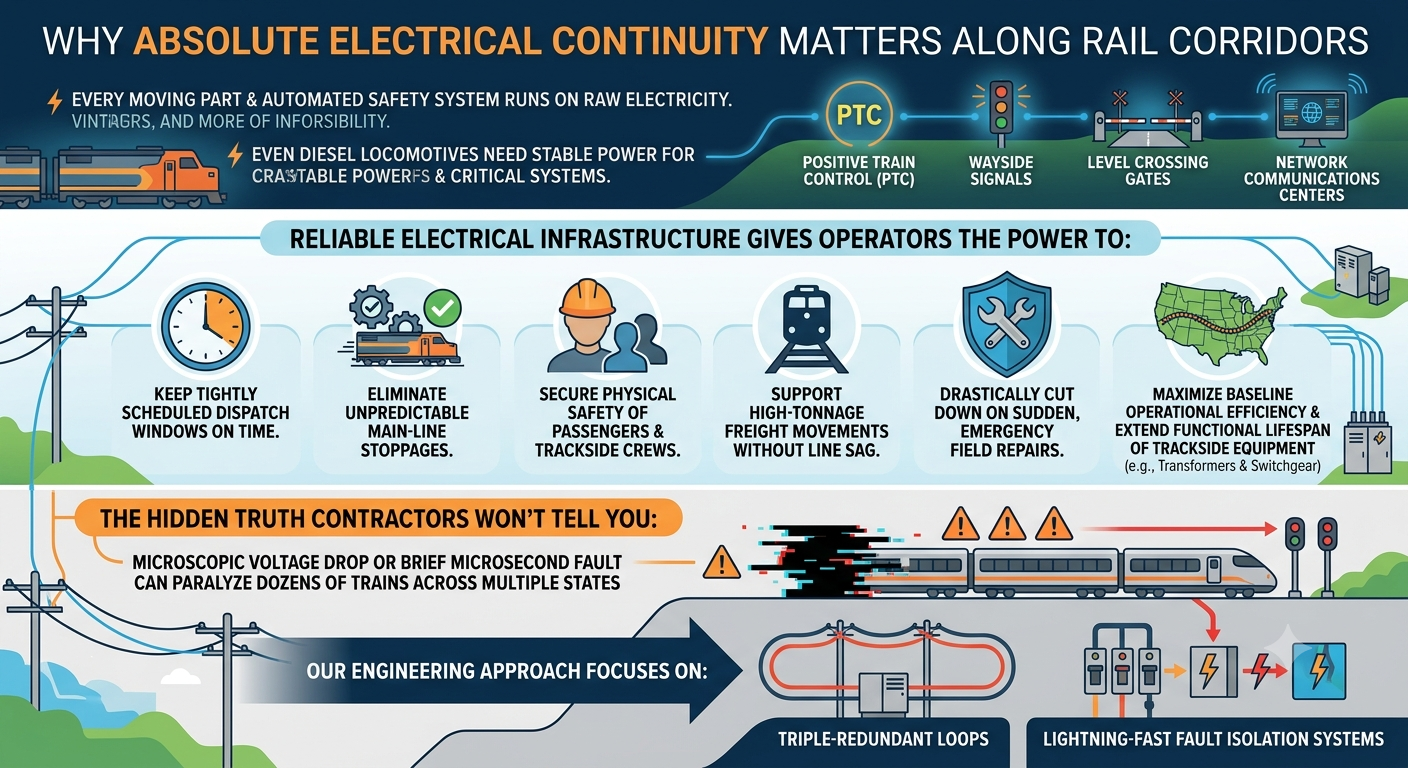
Every single moving part and automated safety system along a modern rail alignment runs on raw electricity. Even if an operator runs a fleet of heavy diesel-electric locomotives, the trains cannot move an inch safely without stable electrical power feeding the positive train control systems, wayside signals, level crossing gates, and network communications centers.
Deploying highly reliable electrical infrastructure gives operators the power to:
- Keep tightly scheduled dispatch windows on time.
- Eliminate unpredictable main-line stoppages.
- Secure the physical safety of passengers and trackside maintenance crews.
- Support high-tonnage freight movements without line sag.
- Drastically cut down on sudden, emergency field repairs.
- Maximize the baseline operational efficiency of regional networks.
- Extend the functional lifespan of expensive trackside transformers and switchgear.
Here is the part most contractors won't tell you: a microscopic voltage drop or a brief microsecond fault can cause an entire automated signaling system to drop into a fail-safe stop mode. Because one small glitch can paralyze dozens of trains across multiple states, our engineering approach focuses heavily on building triple-redundant loops and lightning-fast fault isolation systems directly into the footprint.
GET IN TOUCH
The ultimate solution for reliable power control! call us at 276-285-3841
How Do Power Distribution Networks Support Non-Stop Railway Operations?
Modern rail infrastructure operates as a vast, interconnected ecosystem that never sleeps. Every single piece of equipment along the ballast depends entirely on clean, uncompromised power feed consistency.
1. Driving Heavy Train Traction System Movement
Electric locomotives grab their massive operational power directly via overhead catenary wires or heavy steel third-rail systems. Tucked away behind those highly visible trackside components sits an array of specialized traction substations, massive step-down transformers, heavy arc-resistant switchgear, and robust power distribution networks that clean up incoming utility voltage. Keeping this delivery smooth stops massive voltage dips when multiple trains start rolling simultaneously, protecting expensive traction motors from running hot and wearing out prematurely.
2. Energizing Critical Wayside Signaling Infrastructure
Wayside railway signaling is the primary line of defense protecting millions of tons of fast-moving steel from catastrophic collisions. Interlocking towers, switch machines, track circuits, flashing crossing gates, and automated wayside control systems demand absolutely flawless electrical power.
Integrating a resilient power layout yields real operational benefits:
- Keeps automated train spacing metrics perfectly accurate.
- Wipes out phantom signal drops that halt traffic.
- Cuts down on costly emergency maintenance callouts.
- Maximizes the physical safety metrics of the entire line.
When a signaling bungalow loses power, the tracks go dark, forcing automated systems to halt every train in the sector. Investing in heavy-duty distribution architecture is the only way to avoid these costly shutdowns.
3. Maintaining Continuous Fiber and Radio Communication Loops
Modern rail systems depend completely on real-time data flow between regional dispatch centers, locomotive engineers, track maintenance crews, and first responders. If your communication shacks lose power, the whole network goes blind.
Robust electrical setups reliably keep these critical systems active:
- Multi-band railway radio transmission towers.
- Trackside fiber-optic backbone repeaters.
- Regional network control and dispatch stations.
- High-speed telemetry data transmission gear.
- Localized network routing systems.
Continuous electrical availability ensures dispatch operators can tweak train routing on the fly and respond instantly to changing field conditions before a minor delay turns into a major network gridlock.
4. Backing Up Passenger Terminals and Heavy Repair Facilities
Commuter stations require immense amounts of stable electrical power to handle thousands of daily passengers safely. This includes running overhead platform lighting, public escalators, commercial HVAC units, ticket kiosks, security arrays, and live passenger information boards.
Simultaneously, heavy maintenance facilities depend on massive electrical feeds to run automated inspection bays, wheel truing machines, overhead cranes, and heavy diagnostic systems. Using heavy-duty power distribution networks prevents unexpected facility blackouts and keeps service turnarounds moving smoothly.
What Challenges Do Rail-Side Power Distribution Networks Face Daily?
The environment surrounding a rail alignment is incredibly hostile to electrical equipment, presenting problems that would instantly destroy standard industrial setups.
- Immense Dynamic Power Swings: High-speed electric trains pull massive spikes of electricity when accelerating away from platforms, requiring the power distribution networks to handle extreme load fluctuations instantly without dropping line voltage.
- Severe Environmental Weather Exposure: Trackside equipment sits out in the elements year-round, forcing enclosures to survive pounding rain, freezing blizzards, desert sandstorms, intense summer heat waves, direct lightning strikes, and non-stop track vibration.
- Ongoing Track System Extensions: As urban centers spread out and cargo volume climbs, transit grids must constantly grow, which means the underlying electrical architecture must be built with open, modular configurations to accept new substations without rebuilding the core layout.
- Razor-Thin Facility Maintenance Windows: Rail operators run tight schedules with almost zero downtime for regular field inspections, requiring electrical hardware to be extraordinarily durable, easily accessible for rapid testing, and engineered for long service intervals.
Why Is Custom Engineering Design Critical for Rail-Side Infrastructure?
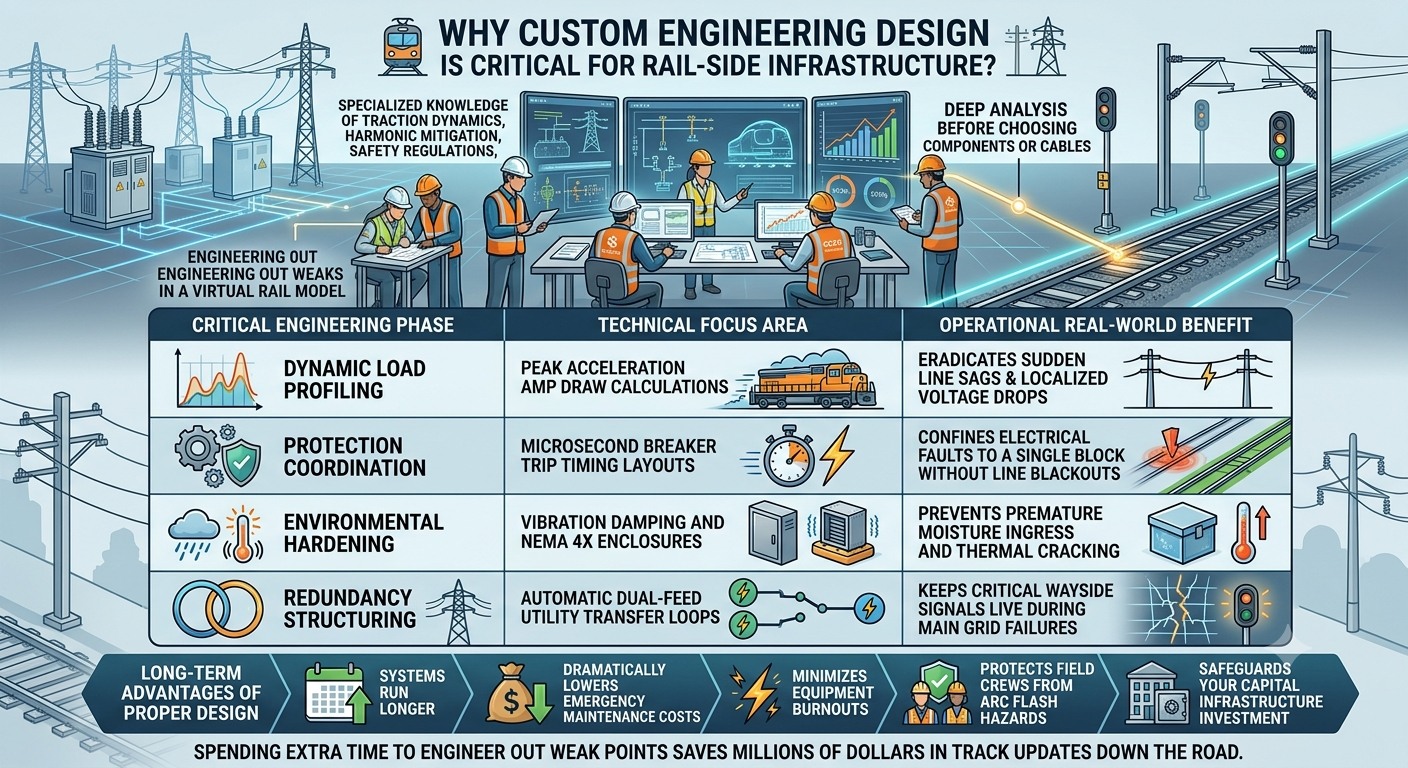
Building out functional rail-side power infrastructure is not a matter of ordering parts out of a generic catalog. It requires deeply specialized knowledge of traction dynamics, harmonic mitigation, and strict safety regulations. Engineers have to carefully calculate and analyze an enormous range of variables before choosing single-point components or running a single foot of cable:
|
|
|
|
|
|
|
|
|
|
|
|
|
|
|
|
|
|
|
|
A properly designed setup keeps systems running longer, dramatically lowers emergency maintenance costs, minimizes equipment burnouts, protects field crews from arc flash hazards, and safeguards your capital infrastructure investment. Spending the extra time to engineer out the weak points during the design phase saves millions of dollars in track updates down the road.
Wayside Risk Mitigation Box
Pro Tip: When laying out wayside power bungalows, never rely on standard industrial line breakers. The intense, rapid cycling of traction power creates severe harmonic echoes that cause generic breakers to trip falsely or wear out their contacts prematurely. Always specify heavy-duty solid-state trip units calibrated for high-harmonic railway environments, and pair them with robust surge protection modules to absorb the inevitable line spikes caused by lightning strikes and regenerative braking feedback.
GET IN TOUCH
The ultimate solution for reliable power control! call us at 276-285-3841
Technical Grounding of Modern Railway Grid Entities
To successfully interface with modern utility grids and transit networks, system blueprints must explicitly ground designs in specific technical components:
- Traction Substations: High-voltage electrical installations that transform incoming utility power down to the specific voltage levels required by electric locomotives.
- Overhead Catenary Systems (OCS): The complex system of overhead wires suspended above the tracks that supplies electrical current to trains via pantographs.
- Negative Return Current Paths: The vital return circuit formed by the running rails that channels current safely back to the substation, requiring meticulous bonding to prevent stray current corrosion.
- Wayside Control Bungalows: Specialized, weather-resistant trackside enclosures housing critical signaling, communication, and power management equipment.
- Regenerative Braking Systems: Advanced traction configurations that feed kinetic energy back into the power distribution networks when trains slow down, requiring specialized grid management to handle the power reversal.
How Swartz Engineering Delivers Uncompromising Rail Power Solutions
At Swartz Engineering, we know firsthand that weak power infrastructure translates directly to lost time, ruined components, and massive operational liabilities. Our specialized engineering group focuses on building tough, reliable equipment designed to keep industrial rail operations running flawlessly under the most brutal physical conditions.
Our deep field capabilities cover custom layout designs supporting:
- High-volume heavy freight rail operations.
- Multi-car regional commuter rail grids.
- Closed-loop heavy industrial and mining rail lines.
- Complete overhauls of legacy traction substations.
- Long-term corridor capacity and distribution planning.
- Targeted system reliability and power quality audits.
We never approach a project with cheap, cookie-cutter templates. We analyze your specific line metrics, terrain challenges, and weight loads to deliver rugged, tailormade equipment built for long-term performance. This customized engineering focus cuts down your field risks and guarantees your systems stay online across the USA.
The Next Frontier for Rail Corridor Power Delivery
As modern transit networks integrate smarter digital technologies, the underlying electrical distribution footprint is shifting away from analog hardware toward intelligent, self-healing grids.
Tomorrow's railway networks will heavily leverage real-time digital monitoring, smart automated substations, machine-learning predictive maintenance arrays, remote system diagnostics, and high-speed automated fault isolation loops. Using real-time thermal and wave-form sensors allows maintenance supervisors to spot a failing insulation wrap or a hot transformer bushing weeks before it causes a line failure. As transit authorities transition to greener, fully electrified systems, having a highly resilient power distribution framework will separate the top-performing lines from those constantly plagued by delays.
Ready to Secure Your Rail Corridor's Power Infrastructure?
A dependable, high-efficiency rail corridor requires far more than just laying down heavy steel tracks and running locomotives. True operational continuity is built from the ground up on rugged, meticulously engineered electrical systems that keep your trains moving, your wayside signaling active, and your operations hubs fully powered. Investing in custom-designed power distribution networks eliminates costly service disruptions, improves baseline track safety metrics, trims your yearly maintenance overhead, and ensures your infrastructure can handle expanding cargo loads for decades to come.
Swartz Engineering provides the rugged American craftsmanship and targeted technical expertise required to build resilient, high-capacity electrical grids tailored for today's heavy transit demands. Whether you need to replace aging substation switchgear along a legacy line or map out a high-voltage distribution layout for a new industrial spur, our team delivers field-tested systems that keep your wheels turning. Call Swartz Engineering today to speak with an infrastructure engineer and request a comprehensive custom project layout for your next track expansion.
Frequently Asked Questions
Q: What are the main components of power distribution networks in railway systems?
A: These networks consist of utility grid interfaces, traction power substations, high-voltage transformers, switchgear, wayside control bungalows, overhead catenary lines or third rails, and running rail return paths that deliver power to locomotives and safety equipment.
Q: How do power distribution networks adapt to rapid load shifts from trains?
A: They utilize heavy-duty voltage regulators, automatic tap-changing transformers, and high-capacity capacitor banks that damp down sudden power surges and sags caused by accelerating locomotives.
Q: Why do diesel-electric rail systems require power distribution networks?
A: Even though diesel trains generate their own traction power, the entire track alignment still requires continuous utility-fed distribution networks to run safety-critical signals, crossing gates, positive train control data centers, and fiber-optic communication lines.
Q: What environmental protections are built into trackside electrical enclosures?
A: Equipment is housed in heavy-gauge, corrosion-resistant stainless steel or aluminum enclosures rated NEMA 4X, which are sealed against driving rain, dust, and ice, and fitted with specialized shock-absorbing mounts to withstand constant ground vibrations.
Q: How does Swartz Engineering customize power distribution equipment for rail operators?
A: We run detailed dynamic load analyses, short-circuit calculations, and harmonic evaluations based on your specific fleet weight, train frequency, and local climate to fabricate rugged, purpose-built substations and switchgear that outperform standard catalog hardware.
Our Expert Services
Swartz Engineering provides top-quality products to achieve our customers' needs. We also make sure our products work reliably and safely. Our products include:
- Type 76 DC Relay
- Type 82 DC Relay
- Swartz Engineering’s Type 64 Ground Relay
- Type 32 Reverse Current Relay
- Type 150 DC
- CSM Shield Monitor
- Metal Oxide Surge Arrestors
- Transducers
- MVIS SL Slim-line Contactor
- Fully-tested Power Control Rooms
- Swartz Engineering’s Portable Substations
Contact Us
If you have a need for regular mobile power solutions, backups, or temporary power solutions, Swartz Engineering can deliver the crucial systems in a custom build for your needs. Contact us today to learn more about our mobile substation designs.