
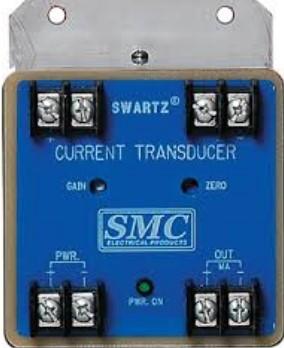
Modern railways depend on more than tracks, trains, and timetables. Every safe acceleration, controlled stop, and reliable signal relies on precise electrical monitoring behind the scenes. One component plays a quiet but essential role in making this possible: the current transducer. If you’re asking what is a current transducer, the short answer is this: it is a device that measures electrical current and converts it into a signal that railway control and protection systems can safely use. Railways need it to monitor power, protect equipment, improve safety, and control energy costs. At Swartz Engineering, we work with railway and transit operators across the USA, helping them apply reliable electrical measurement solutions that stand up to the demanding conditions of rail environments.
Key Takeaways
- A current transducer measures electrical current and converts it into a usable signal for monitoring and control
- Railways rely on current transducers for traction power monitoring, safety protection, and signaling reliability
- Accurate current measurement helps prevent equipment damage and improves operational efficiency
- Railway environments demand durable, high-accuracy transducers built for vibration and temperature extremes
- Swartz Engineering supports U.S. rail systems with practical engineering guidance and proven solutions
What Is a Current Transducer?
A current transducer is an electrical measurement device that senses current flowing through a conductor and converts it into a proportional output signal. That output may be analog (such as voltage or current) or digital, depending on the application.
When people ask what is a current transducer, a helpful way to think about it is as a translator:
- Electrical current flows through cables and busbars
- Control systems cannot directly read that raw current
- The transducer converts it into a safe, standardized signal
- Monitoring and protection systems use that signal to make decisions
In railway systems, this translation supports everything from traction power control to fault detection and energy analysis.
How Current Transducers Work (In Simple Terms)
Although designs vary, the basic operating principle is consistent.
A current transducer typically:
- Senses the magnetic field or electrical effect created by current flow
- Processes that information internally
- Outputs a signal that accurately represents the actual current
Common current transducer types used in railway applications include:
- Hall-effect current transducers
- Suitable for AC and DC systems
- Used widely in traction and power distribution
- Closed-loop (compensated) transducers
- Higher accuracy and stability
- Ideal for protection and precise energy monitoring
- Rogowski coils
- Designed for very high current levels
- Often used in traction substations
Each type serves a specific role depending on accuracy needs, response time, and installation constraints.
CONTACT US
Take the first step towards powering up your operations! call us at 276-285-3841
Why Railways Depend on Current Transducers
Railway electrical systems operate under constant stress. High current loads, frequent cycling, and environmental exposure make accurate monitoring essential.
Below are the primary reasons current transducers are critical to rail operations.
1. Traction Power Monitoring
Electric trains draw large currents during acceleration, hill climbing, and regenerative braking. Monitoring these currents helps operators:
- Protect traction motors from overload
- Detect abnormal power draw early
- Maintain consistent performance across the fleet
Accurate traction current data reduces unexpected failures and costly downtime.
2. Safety and System Protection
Electrical faults in rail systems can escalate quickly if not detected early. Sudden current changes may indicate:
- Short circuits
- Ground faults
- Equipment insulation breakdown
Current transducers provide real-time input to protection relays and control systems, allowing fast response before damage or safety risks occur.
3. Signaling and Control Reliability
Railway signaling systems depend on stable electrical conditions. Even small current deviations can affect:
- Track circuit detection
- Signal timing accuracy
- Train location verification
High-quality current measurement ensures signaling systems remain predictable and reliable, which is essential for passenger safety.
4. Energy Efficiency and Cost Control
Energy costs represent a major operating expense for railways. Current data allows operators to:
- Analyze power consumption patterns
- Optimize train operation schedules
- Reduce peak demand charges
This information supports both financial efficiency and long-term sustainability goals.
What Makes Railway Applications Different?
Railways place unique demands on electrical components. A device that performs well in a factory may fail prematurely in a rail environment.
Railway-grade current transducers must withstand:
- Continuous high current levels
- Electrical noise and harmonics
- Mechanical vibration and shock
- Wide temperature swings
At Swartz Engineering, we understand that reliability in rail systems is not optional. Components must perform accurately not just during commissioning, but year after year in real-world conditions.
Choosing the Right Current Transducer for Rail Systems
Selecting the correct solution requires more than matching a current rating. Engineers must consider multiple factors, including:
- Current range
- From low-level signaling circuits to high-power traction feeds
- Accuracy class
- Especially important for protection and energy monitoring
- Response time
- Critical for fast fault detection
- Electrical isolation
- Essential for system safety
- Environmental ratings
- Resistance to vibration, moisture, and temperature extremes
Understanding what is a current transducer in theory is useful, but real-world selection depends on experience with railway-specific challenges.
Why Railway Operators Work With Swartz Engineering
Swartz Engineering supports railway and transit systems throughout the USA with practical, application-focused solutions. We do not simply supply components—we help ensure they work correctly in demanding environments.
Our support includes:
- Guidance on application-specific transducer selection
- Solutions for traction power, signaling, and power distribution
- Engineering assistance during system integration
- Long-term reliability and compliance support
We work directly with engineers who need dependable data and equipment they can trust.
CONTACT US
Take the first step towards powering up your operations! call us at 276-285-3841
The Growing Role of Current Transducers in Modern Rail
As rail systems become more electrified and digitally monitored, accurate current measurement becomes even more important.
Emerging rail technologies rely on current transducers to support:
- Regenerative braking analysis
- Predictive maintenance programs
- Digital monitoring and automation
- Energy optimization initiatives
These devices operate quietly in the background, but their impact on safety and efficiency is significant.
Conclusion
So, what is a current transducer, and why do railways need it? It is the link between raw electrical power and intelligent control. It protects equipment, supports safety systems, improves energy efficiency, and keeps rail networks running reliably every day.
At Swartz Engineering, we help railway operators across the USA select and apply current transducer solutions built for real-world performance. If precision, durability, and engineering support matter to your operation, working with experienced partners makes a measurable difference.
Frequently Asked Questions
What does a current transducer do in a railway system?
A current transducer measures electrical current and converts it into a signal used by monitoring, protection, and control systems.
Are current transducers used in both AC and DC rail systems?
Yes. Different transducer types are designed to measure AC, DC, or both, depending on the application.
Why is accuracy important in railway current measurement?
Accurate measurement supports safety protection, energy analysis, and reliable system operation.
Where are current transducers installed in railways?
They are commonly used in traction power systems, substations, signaling circuits, and power distribution panels.
How does Swartz Engineering support railway projects?
Swartz Engineering provides application guidance, reliable measurement solutions, and long-term support for railway electrical systems across the USA.
Our Expert Services
Swartz Engineering provides top-quality products to achieve our customers' needs. We also make sure our products work reliably and safely. Our products include:
- Type 76 DC Relay
- Type 82 DC Relay
- Swartz Engineering’s Type 64 Ground Relay
- Type 32 Reverse Current Relay
- Type 150 DC
- CSM Shield Monitor
- Metal Oxide Surge Arrestors
- Transducers
- MVIS SL Slim-line Contactor
- Fully-tested Power Control Rooms
- Swartz Engineering’s Portable Substations
Contact Us
If you have a need for regular mobile power solutions, backups, or temporary power solutions, Swartz Engineering can deliver the crucial systems in a custom build for your needs. Contact us today to learn more about our mobile substation designs.