
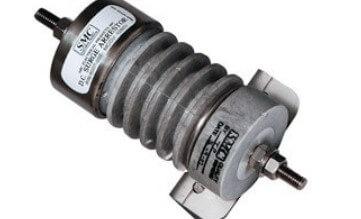
The electrical reality inside a transit substation isn't theoretical—it’s loud, hot, and unforgiving. When lightning strikes a catenary line or a heavy traction chopper locks up, thousands of transient volts hunt for the path of least resistance. If your substation relies on legacy silicon carbide gaps, that energy blows right past your protection and fries your signaling relays. Upgrading to a modern metal oxide surge arrester setup is the single fastest way to isolate these transients before they cook your physical infrastructure and drop your rail schedule into chaos.
Key Takeaways
- Instantaneous Clamping: Modern zinc oxide designs eliminate physical spark gaps, cutting response times down to nanoseconds.
- Thermal Endurance: High-energy varistors absorb successive switching spikes without drifting off calibration parameters.
- Component Longevity: Lowered voltage ceilings reduce the dielectric punch delivered to multi-million dollar transformer coils.
- Substation Grid Stability: Modernizing protection networks stops localized transients from bleeding back into primary utility feeds.
Why Are Older Transit Assets Failing Under Modern Electrical Loads?
Aging transit substations face higher failure rates because deteriorating cable insulation cannot withstand the aggressive voltage transients generated by modern solid-state traction drives. Legacy track infrastructure was built for steady, predictable linear loads. Today, high-frequency regenerative braking and electronic switching throw constant electrical noise back into the grid, punching through degraded insulation that is already weakened by years of environmental stress.
Operational Vulnerabilities
- Dielectric Breakdown: Continuous thermal cycles cook the paper-oil insulation inside legacy transformers, turning minor spikes into catastrophic winding shorts.
- High-Frequency Echoes: Modern silicon-controlled rectifiers (SCRs) inject steep-front wave transients that bypass ancient protection schemes entirely.
- Low-Tolerance Signaling: Microprocessors managing computerized train control loops will trip or freeze when subjected to even minor ground potential rises.
- Atmospheric Corrosive Wear: Decades of brake dust, diesel soot, and localized humidity build conductive paths across external housing shells, causing tracking faults.
The field reality is simple: you can't protect a 2026 digital signaling asset with 1980s gap technology. When a spike hits an old silicon carbide unit, the air gap has to physically ionize before it conducts. That delay is all it takes to ruin a rack of sensitive wayside electronics.
How Does a Modern Varistor Design Limit Trackside Overvoltage?
A modern metal oxide surge arrester utilizes non-linear zinc oxide disks to clamp overvoltage spikes instantly without mechanical movement. Under normal running conditions, the material acts as a strict insulator, drawing microamps of leakage current. The second a high-voltage spike hits the line, the internal resistance collapses to near-zero, creating a clear, high-capacity path that dumps excess energy straight to the grounding grid.
The Protective Advantage
- Zero Spark-Gap Delay: Eliminating physical air gaps means the device starts suppressing the wave the exact microsecond the voltage crosses the threshold.
- Superior Energy Dissipation: Heavy zinc oxide blocks handle massive megajoule dumps without experiencing thermal runaway or mechanical fragmentation.
- Tight Protection Margins: The sharp knee-curve of the varistor allows engineers to specify lower clamping voltages, keeping stress well below equipment insulation levels.
GET IN TOUCH
The ultimate solution for reliable power control! call us at 276-285-3841
Commercial Comparison: Legacy Protection vs. Modern Varistor Upgrades
|
|
|
|
|
|
|
|
|
|
|
|
|
|
|
|
|
|
|
|
|
|
|
|
|
When Should Infrastructure Managers Pull the Trigger on Substation Retrofits?
Substation managers should initiate an upgrade program immediately when power quality logs reveal recurring transient voltage spikes or when upgrading track sections to digital signaling. Relying on age alone is a trap. If your field crews are replacing signaling cards after every minor summer storm, your grounding and surge protection network has already failed, regardless of what the asset lifecycle spreadsheet claims.
Risk Indicators
- Repeated Transformer Gassing: Dissolved gas analysis (DGA) showing elevated hydrogen points directly to micro-arcing from unsuppressed surges.
- Nuisance Breaker Trips: Traction substations dropping offline during standard line-switching procedures indicate bad insulation coordination.
- Feeder Cable Splice Blowouts: Recurring faults at mid-run cable joints show that high-voltage reflections are traveling unchecked down the distribution lines.
The Field Blueprint: Deploying New Protection Safely
Executing a successful metal oxide surge arrester deployment requires strict verification of Maximum Continuous Operating Voltage (MCOV) and precise matching of discharge currents. A field retrofit is never a generic parts swap. If you under-specify the continuous voltage rating to chase a lower clamping point, the line voltage will cook the varistor during normal operations, leading to an explosive phase-to-ground fault inside your enclosure.
4-Phase Implementation Framework
- System Coordination Study
- Map the exact Basic Insulation Level (BIL) of every transformer and switchgear cabinet in the line.
- Model the maximum peak transient voltage generated by local lightning patterns and switching configurations.
- Mechanical Profile Matching
- Source custom busbar adaptors to match old footprint orientations without bending existing copper leads.
- Verify creepage distances to prevent tracking over the porcelain or polymer housings in high-pollution zones.
- Ground Path Certification
- Measure ground grid resistance using a fall-of-potential test to guarantee the path to earth is under two ohms.
- Install heavy, non-braided copper leads to eliminate high-frequency impedance bottlenecks during major dumps.
- Energization & Thermal Baselines
- Conduct a power-frequency leakage current test to establish a clean field performance baseline.
- Shoot the completed install with a thermal imaging camera under full load to confirm zero hot spots at terminal links.
Key Technical Grounding Terms Every Field Engineer Must Know
- MCOV (Maximum Continuous Operating Voltage): The maximum continuous root-mean-square (rms) power frequency voltage that may be applied safely across the arrester terminals.
- TOV (Temporary Overvoltage): Short-duration power frequency spikes caused by system faults or sudden load shedding that the arrester must survive without failing.
- Duty-Cycle Voltage Rating: The designated maximum permissible voltage between the line and earth terminals at which an arrester is designed to perform its duty cycle safely.
- Discharge Current: The rapid surge current that flows through the varistor material to the grounding matrix once the clamping voltage threshold is crossed.
Field Insight from the Substation Floor
Here is something the equipment catalogs won't mention: pay close attention to your housing materials when retrofitting old urban vaults. Porcelain housings are cheap, but if a major system fault overwhelms the pressure relief vents, they shatter into razor-sharp shrapnel that destroys adjacent control wiring. For tight transit vaults or elevated structures subject to heavy vibration, specify polymer-housed units. If they fail, they split down the seam without throwing destructive debris across your substation footprint.
GET IN TOUCH
The ultimate solution for reliable power control! call us at 276-285-3841
Demanding Resilience: Upgrading Your Operational Infrastructure
Upgrading your network’s surge protection isn't about padding a maintenance schedule—it is about protecting your system’s bottom line and ensuring passenger runtime reliability. Leaving outdated protection assets on your traction lines guarantees that a single major utility swing or lightning hit will eventually bridge your insulation gaps, knock out your signaling logic, and strand trains down the line.
Swartz Engineering works directly with transit authorities and industrial power users to design, test, and drop in high-durability metal oxide surge arrester configurations engineered for heavy traction environments. We build field-tested solutions that drop straight into legacy footprints, keeping your installation windows tight and your operational tracks safe from unexpected outages. Discover how Swartz Engineering builds heavy-duty traction power solutions that keep transit networks moving.
Frequently Asked Questions
Q: How do you choose between porcelain and polymer housings for trackside installations?
A: Polymer housings are preferred for heavy transit tracks because they resist physical damage from rock ballast impacts and track vibration while eliminating shrapnel risks if a catastrophic fault occurs. Porcelain works well in static, high-pollution outdoor switchyards where raw UV resistance is the primary concern.
Q: Can these varistors handle regenerative braking voltage feedback?
A: Yes, but the system must be engineered carefully. The metal oxide surge arrester must have an MCOV rating set comfortably above the maximum peak voltage produced by train braking grids to prevent the device from conducting during non-fault operations.
Q: What is the typical field lifespan of a solid-state varistor unit?
A: In typical transit environments, a properly rated unit lasts between 15 and 25 years. Lifespan is dictated by the total cumulative megajoules of energy absorbed rather than simple chronological age.
Q: Why does a long ground lead ruin the effectiveness of the protection?
A: High-frequency surge currents see straight wire length as pure inductance. Every extra inch of ground lead adds massive impedance to the circuit, creating a voltage drop across the wire that forces the surge back into your sensitive equipment terminals.
Q: How do you test the health of a varistor that is currently in service?
A: Field crews use specialized leakage current monitors to track the resistive component of the total leakage current at normal operating voltages. A sharp rise in resistive current indicates thermal degradation of the internal zinc oxide disks, indicating it is time to schedule a replacement.
Products We Offer
Swartz Engineering strives to provide top-quality products to achieve our customer's needs. Our products include:
- Type 76 DC Relay
- Type 82 DC Relay
- Swartz Engineering’s Type 64 Ground Relay
- Type 32 Reverse Current Relay
- Type 150 DC
- CSM Shield Monitor
- Metal Oxide Surge Arrestors
- Transducers
- MVIS SL Slim-line Contactor
- Fully-tested Power Control Rooms
- Swartz Engineering’s Portable Substations
For nearly half a century, we have proudly led the industry in ensuring safety and efficiency. Swartz Engineering is a trusted family-owned company dedicated to providing top-notch power distribution solutions for the electrical industry. Contact us toda