
Centralized power management helps railway operators see changing electrical demand, coordinate responses, and plan capacity around actual train movements. Its value comes from connecting measurements and operating decisions across the network. The equipment supplying each section still needs enough capacity to carry the load.
At Swartz Engineering, we specialize in power distribution equipment. For railway projects, that makes the relationship between electrical demand, equipment protection, and control especially important.
Key Takeaways
- Centralized power management brings distributed electrical equipment into a coordinated operating view.
- Train locations and overlapping acceleration demands matter when assessing available capacity.
- Monitoring can reveal problems, but added capacity or operating changes may still be necessary.
- Regenerative braking needs a suitable destination for recovered energy.
- A power control room supports the electrical installation; its enclosure alone does not manage network loads.
What Centralized Power Means in Railway Operations
For this article, centralized power means coordinated supervision and management of railway electrical supplies. It does not imply that every train receives electricity from a single substation.
Substations and feeder equipment remain distributed along the route. A supervisory control and data acquisition system, commonly called SCADA, brings operating information together and supports authorized remote control. Depending on the installation, operators can review measurements, equipment states, alarms, and historical records.
Commercial railway control systems distinguish network supervision from optional energy-management functions. That distinction matters: displaying demand does not automatically optimize it.
Why Railway Electrical Loads Need More Than an Average
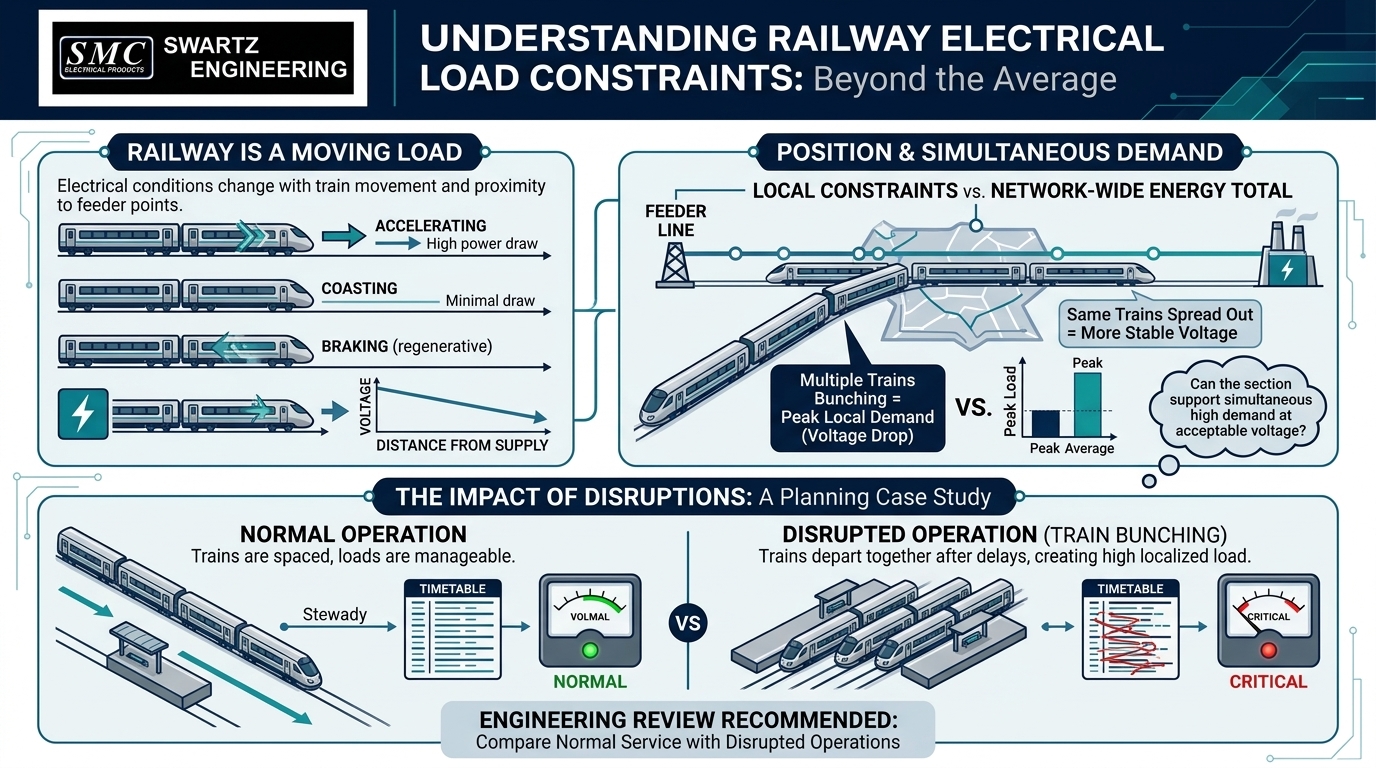
A railway is a moving load. The electrical conditions change as trains accelerate, coast, brake, and move farther from supply points. Several trains accelerating together can create a more demanding condition than the same trains operating at different times.
Train position also matters. A recent railway power-flow study examines how simultaneous demand and distance along a shared feeder affect voltage and the power available to trains. This helps explain why a network-wide energy total cannot describe every local constraint.
Consider a hypothetical corridor where service resumes after a delay. Several trains may depart close together. The planning question is then specific: can the affected electrical section support those movements at acceptable voltage?
For an engineering review, we recommend comparing normal service with disrupted operation. A timetable that works comfortably on an ordinary day may create different demands when trains bunch together.
GET IN TOUCH
The ultimate solution for reliable power control! call us at 276-285-3841
How Centralized Power Helps Manage Demand
Bring the operating picture together
A shared view helps personnel connect an alarm with the wider network state. Historical records can also support investigation after a recurring problem.
For example, an operator reviewing repeated alarms should be able to ask whether they coincide with a particular service pattern or equipment condition. That is a more useful starting point than treating every event as unrelated.
SCADA and energy-management platforms can support monitoring, evaluation, demand forecasting, and peak-management functions. Their actual capabilities depend on the selected system and integration.
Turn peak-demand information into a practical decision
A useful load-management plan should identify both the constraint and the available response.
|
|
|
|
|
|
|
|
|
|
|
|
|
|
|
These are review questions, not automatic switching instructions. Any operating response needs to fit the railway's approved controls, protection arrangements, and service requirements.
Use studies to test the proposed solution
Centralized information helps define the problem; electrical studies test whether a proposed response will work.
Rail Baltica's traction-power design guidelines, for example, require load-flow studies to confirm system configuration and determine substation locations and transformer power. They also address contingency performance. These are project-specific requirements, but they illustrate why monitoring should be paired with engineering analysis.
Before selecting an upgrade, ask the designer to compare present demand, planned service growth, and credible equipment outages. The useful result is a defined operating limit and a justified response.
Where Regenerative Braking Fits
Regenerative braking can recover part of a train's motion energy, but the electrical system must be able to use or accept that energy.
Research identifies several recovery approaches: coordinating train operation, using onboard or wayside energy storage, and installing reversible substations. If recovered energy cannot be accepted, it may be dissipated as heat to avoid excessive voltage.
Centralized information can support the assessment, but software alone cannot provide a missing energy sink. For a proposed project, ask where braking energy will go when nearby trains are not drawing power. That question helps distinguish a feasible recovery plan from an assumed saving.
How a Power Control Room Supports the Installation
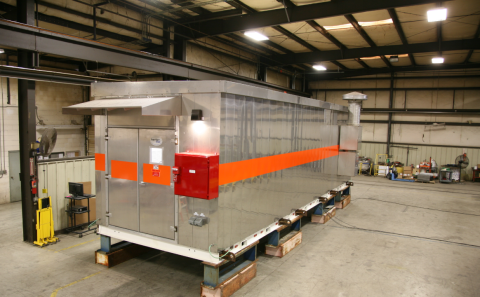
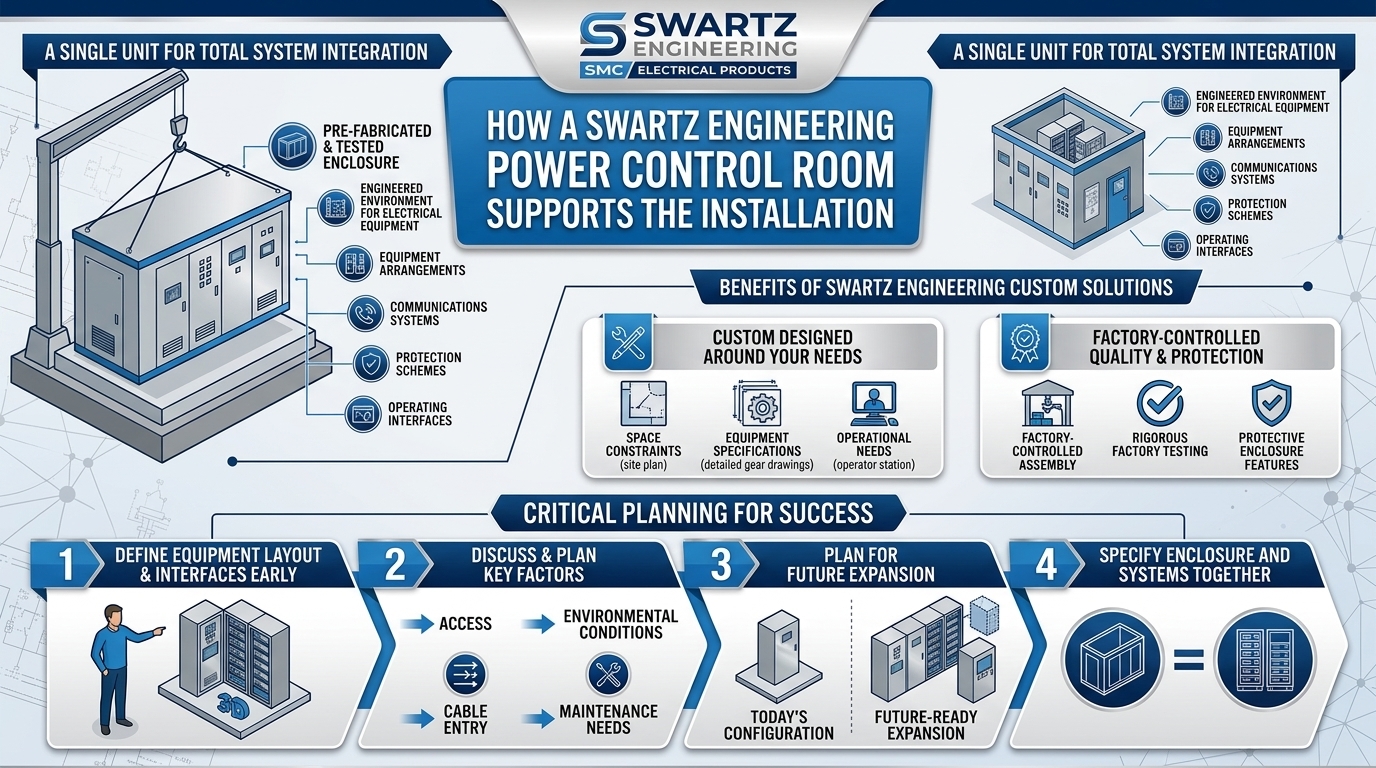
A power control room provides an engineered environment for electrical equipment. It is one part of the installation, alongside the equipment, communications, protection, and operating arrangements.
At Swartz Engineering, we offer custom power control rooms designed around space constraints, equipment specifications, and operational needs. Our published product information describes factory-controlled assembly and testing, along with enclosure features intended to protect electrical infrastructure.
For project planning, we recommend defining the equipment layout and interfaces early. Discuss access, cable entry, environmental conditions, maintenance needs, and future expansion before the room configuration is finalized.
The enclosure and its installed systems should be specified together. A room that accommodates today's equipment may need a different layout if future expansion is already planned.
GET IN TOUCH
The ultimate solution for reliable power control! call us at 276-285-3841
Questions to Ask Before a Railway Power Upgrade
Use the project brief to establish:
- Operating demand: Which train types, service patterns, and growth assumptions must the system support?
- Electrical constraints: Where are voltage, equipment capacity, or supply limitations expected?
- Contingency performance: What service is required when equipment is unavailable?
- Control responsibilities: Which functions are local, remotely supervised, or automated?
- Acceptance evidence: Which studies and tests will demonstrate the required performance?
These questions make the intended outcome measurable. “Better power management” becomes a defined set of operating conditions the completed installation must support.
Discuss Your Railway Power Control Requirements
Planning a railway electrical upgrade starts with understanding the loads and the equipment needed to support them. At Swartz Engineering, we can discuss power control room requirements around your project's space, equipment, and operating needs.
Explore our power control rooms and get in touch to discuss your application.
Frequently Asked Questions
Q: Does centralized power require one railway substation?
A: No. Centralized supervision can coordinate multiple supply locations. The physical distribution arrangement depends on the railway's design.
Q: Can centralized monitoring prevent every overload?
A: No. Monitoring helps reveal demand and operating conditions. Preventing an overload also requires sufficient equipment capacity and an appropriate control or operating response.
Q: Does regenerative braking always reduce grid demand?
A: No. The benefit depends on how much recovered energy can be used, stored, or exported through a compatible system. Recovery opportunities vary with train operation and infrastructure.
Q: Is a power control room the same as SCADA?
A: No. A power control room houses electrical equipment. SCADA provides supervisory monitoring and control. They can form parts of the same project, but serve different functions.
Products We Offer
Swartz Engineering strives to provide top-quality products to achieve our customer's needs. Our products include:
- Type 76 DC Relay
- Type 82 DC Relay
- Swartz Engineering’s Type 64 Ground Relay
- Type 32 Reverse Current Relay
- Type 150 DC
- CSM Shield Monitor
- Metal Oxide Surge Arrestors
- Transducers
- MVIS SL Slim-line Contactor
- Fully-tested Power Control Rooms
- Swartz Engineering’s Portable Substations
For nearly half a century, we have proudly led the industry in ensuring safety and efficiency. Swartz Engineering is a trusted family-owned company dedicated to providing top-notch power distribution solutions for the electrical industry. Contact us today.