
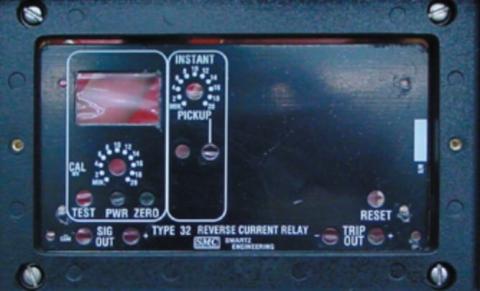
If you’re responsible for protecting traction systems, switchyards, or feeder circuits in a railway network, choosing the right relay can make or break system reliability. The Type 32 Reverse Current Relay plays a major role in preventing unwanted reverse power flow, protecting equipment, and keeping operations consistent. Today’s railway environment demands relays that are accurate, dependable, and easy to maintain—and this guide breaks down the best options available right now, along with practical insights from our engineering team at Swartz Engineering.
Key Takeaways
- Reverse-current protection is essential in railways because of regenerative braking, multiple feeding points, and bi-directional power flow.
- The best relay option depends on fleet age, integration needs, and maintenance capability.
- Electromechanical, solid-state, microprocessor, and hybrid relays all remain viable—each with specific advantages.
- The Type 32 Reverse Current Relay must be evaluated using real system conditions, CT/PT ratios, testing workflow, and environmental constraints.
- A thoughtful evaluation process reduces downtime, improves diagnostics, and extends equipment life.
Why Reverse-Current Protection Matters
Railway electrical systems are busy environments. Trains regenerate power during braking, feeders can energize from multiple directions, and substations see rapid load shifts. A relay isn’t just sensing current—it must know which direction it’s flowing and respond quickly when that flow becomes dangerous.
Reliable reverse-current protection helps:
- Prevent equipment stress
- Reduce unnecessary tripping
- Avoid islanding and back-feeding issues
- Simplify troubleshooting for maintenance crews
That’s why many operators prioritize relays that blend proven directional logic with modern visibility features such as recording, communications, and remote supervision.

GET IN TOUCH
The ultimate solution for reliable power control! call us at 276-285-3841
What to Look for When Choosing a Relay
When evaluating a reverse-current relay, focus on the characteristics that affect daily operations. Railways operate in harsher, more variable conditions than typical industrial sites, so attention to detail matters.
Key factors include:
- Directional sensitivity: Must detect small reverse currents without nuisance trips.
- Pickup accuracy: Essential for networks with multiple braking trains.
- Response time: Determines how quickly the relay isolates a problem.
- Transient immunity: Prevents misoperation during switching or lightning.
- Event logging & communication: Useful for diagnosing faults.
- Ease of testing: Technicians should be able to validate settings without complex tools.
- Environmental rating: Vibration, temperature extremes, and dust can affect performance.
Some relays excel in directional precision but lack advanced logging. Others integrate perfectly with SCADA but may require more setup skills. The goal is to match capability with the needs and workflow of your railway network.
What are the Best Relay Options and Why They Stand Out
Electromechanical Directional Relays
These relays remain surprisingly popular in older or mixed fleets. Their advantages include:
- Mechanical durability
- Simple, familiar wiring
- Highly predictable pickup characteristics
- Ease of field adjustment
If your team values rugged hardware and straightforward maintenance, electromechanical options still perform well. They also pair nicely with legacy switchgear.
Solid-State Directional Relays
Solid-state units offer a balance between mechanical simplicity and electronic stability. They typically include:
- Analog sensing with electronic directional logic
- Adjustable sensitivity
- Reliable operation across wide temperature ranges
- Lower mechanical wear
These relays fit well in fleets where reliability is important but full digital integration isn’t required.
Microprocessor-Based Protection Relays
For modern railways, digital relays are often the preferred option. They offer:
- High-accuracy directional measurement
- Programmable logic
- Event and oscillography recording
- Protocol support (IEC 61850, DNP3, Modbus)
- Remote configuration and monitoring
With features that streamline troubleshooting and reduce mean time to repair, these relays often provide the strongest return on investment. Mid-content note: Many networks that use microprocessor relays also incorporate the Type 32 Reverse Current Relay function into broader protection schemes.
Hybrid Relay Solutions
Hybrid relays combine:
- The mechanical toughness of electromechanical relays
- Digital modules for communications and data
They are ideal for rail operators who want remote visibility but must remain compatible with older panels, wiring, or control philosophies.
Mid-Project Checklist
Before finalizing a relay selection or upgrade project, confirm that:
- CT/PT ratios match the relay model
- The grounding scheme is compatible
- Coordination with upstream and downstream protection is documented
- The relay fits into any reclose or automated distribution scheme
- Technicians are trained to commission and test it
Also, document every chosen setting and record all test results. This is especially important when configuring the Type 32 Reverse Current Relay, since thresholds vary widely based on system design.
Installation and Commissioning Tips
To support reliable operation:
- Mount relays away from strong vibration whenever possible
- Use ferrules and properly rated terminals
- Size instrument transformers for maximum load and braking conditions
- Run staged tests: no-load, controlled reverse-current injection, and full functional checks
Many modern relays offer virtual test inputs—use them. They help verify logic without energizing equipment and reduce human error during commissioning.

GET IN TOUCH
The ultimate solution for reliable power control! call us at 276-285-3841
Maintenance and Lifecycle Planning
Railway systems benefit from structured relay maintenance.
For electromechanical/solid-state relays:
- Inspect mechanical parts
- Clean contacts
- Check for drift in pickup levels
For digital relays:
- Update firmware periodically
- Back up configuration files
- Review event logs for trends or anomalies
Availability of spare parts is a major factor. If your operation cannot tolerate downtime, consider maintaining a swap-ready spare to minimize outages.
The Swartz Engineering Approach
At Swartz Engineering, relay selection isn’t treated as a simple purchase—it’s approached as a system-level decision. We work with operators to define clear protection goals, whether the priority is:
- Maximum selectivity
- Fastest clearing time
- Detailed analytic data
We evaluate real-world test results, installation constraints, and long-term maintenance needs. Many of our rail clients choose microprocessor relays for their flexibility, while others select solid-state or hybrid models to balance budget, simplicity, and functionality.
Conclusion
Choosing the right relay comes down to understanding your system’s needs and selecting a device that supports long-term reliability. Whether you choose electromechanical, solid-state, digital, or hybrid solutions, make sure the relay supports safe, predictable operation and keeps maintenance manageable. And if you need help creating a selection matrix — including recommended settings for the Type 32 Reverse Current Relay — the team at Swartz Engineering can tailor one using your actual system data.
Reliable protection isn’t flashy, but it’s essential. Choosing wisely keeps your network running smoothly.
Frequently Asked Questions
1. What does a Type 32 Reverse Current Relay actually do?
It detects power flowing in the wrong direction and trips to protect equipment from faults or back-feeding issues.
2. Is a microprocessor relay always better than an electromechanical one?
Not always. Microprocessor relays offer more features, but electromechanical units may be better for environments requiring simplicity and extreme durability.
3. How often should reverse-current relays be tested?
Most operators test annually, but high-traffic rail systems may test semi-annually.
4. Can I mix old and new relay technologies in the same yard?
Yes. Many systems safely operate with mixed technologies, especially when hybrid relays are used.
5. What information do I need before selecting a relay?
CT/PT ratios, load profiles, grounding method, feeder length, maintenance capabilities, and desired communication protocols.
Products We Offer
Swartz Engineering strives to provide top-quality products to achieve our customer's needs. Our products include:
- Type 76 DC Relay
- Type 82 DC Relay
- Swartz Engineering’s Type 64 Ground Relay
- Type 32 Reverse Current Relay
- Type 150 DC
- CSM Shield Monitor
- Metal Oxide Surge Arrestors
- Transducers
- MVIS SL Slim-line Contactor
- Fully-tested Power Control Rooms
- Swartz Engineering’s Portable Substations
For nearly half a century, we have proudly led the industry in ensuring safety and efficiency. Swartz Engineering is a trusted family-owned company dedicated to providing top-notch power distribution solutions for the electrical industry. Contact us today.