
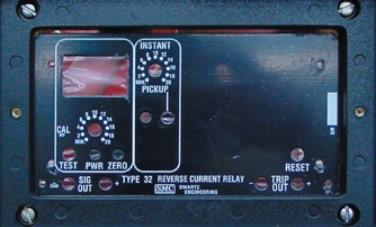
Heavy rail networks aren't just moving steel; they are massive, shifting electrical loads that demand ironclad protection. If your traction power network doesn't have a hardened reverse current relay strategy, you're looking at more than just a tripped breaker—you're looking at fried rectifiers and dead tracks. At Swartz Engineering, we build the protection and control gear that handles the grit of real-world rail: massive load swings, regenerative braking surges, and the unpredictable chaos of aging substation networks. We don't just sell parts; we engineer the fail-safes that keep the North American rail corridor humming under pressure.
Key Takeaways
- Directional Integrity: Prevents catastrophic backfeed into substations and transformers.
- Regen Management: Hardens the system against surges from modern regenerative braking.
- Digital Precision: Replaces "dumb" analog tech with microprocessor-based trip logic.
- System Longevity: Shields expensive rectifiers from thermal stress and premature failure.
- Engineered in the USA: Adaptive protection built specifically for the high-vibration rail environment.
How Does a Reverse Current Relay Protect Heavy Rail Infrastructure?
A reverse current relay acts as a digital sentry, instantly detecting when electricity flows backward from the tracks toward the substation. In a standard DC traction environment, power should be a one-way street. When a fault occurs or voltage imbalances shift the flow, this device triggers a high-speed circuit breaker to isolate the branch. This "gatekeeper" function prevents high-energy backflow from melting down sensitive substation rectifiers and causing cascading blackouts across the line.
GET IN TOUCH
The ultimate solution for reliable power control! call us at 276-285-3841
Why Is Reverse Current Protection Critical for Modern Rail?
The reality of modern rail is that the power grid is constantly fighting itself. Between the heavy amp draw of a departing freight haul and the energy kickback of a passenger train’s braking system, your substations are under siege.
Substation Hardening
Your rectifiers are designed to push power out, not eat it. When a reverse current relay isn't dialed in, that backflow hits the diodes like a hammer, leading to overheating and expensive core failures. We design systems to catch these spikes before the hardware takes the hit.
Regenerative Braking Stability
Modern trains are essentially rolling generators. When they slow down, they dump energy back into the third rail or catenary.
- Safe Redirection: Ensuring the grid absorbs the energy without overloading local nodes.
- Voltage Clamping: Keeping line voltage within the tight tolerances required by sensitive onboard electronics.
- Logic-Based Sorting: Differentiating between healthy "regen" energy and a genuine electrical fault.
Maintaining Operational Continuity
Rail networks are interconnected webs. A fault in one zone can "bleed" into the next if it isn't contained.
- Local Isolation: Trip the local breaker without killing power to the entire district.
- Cascading Prevention: Stop the domino effect of substation shutdowns.
- Rapid Reset: Get the trains moving again with clear diagnostic data on what triggered the event.
How Do Modern Relay Systems Actually Function?
The Strategic Framework: The 4-Phase Protection Cycle
- Continuous Flux Monitoring
- The relay monitors the magnetic flux or shunt voltage in real-time.
- It establishes a "normal" baseline for current direction across the busbar.
- Threshold Delta Analysis
- Digital logic compares the incoming data against programmed setpoints.
- It identifies if the current is merely fluctuating or has fully reversed polarity.
- Transient Filtering (The Noise Filter)
- Short, 50ms spikes from switching or "arcing" are ignored to prevent nuisance trips.
- This is where "Trade" expertise matters—knowing the difference between a glitch and a blowout.
- Command Execution
- Upon a confirmed reversal, the relay sends a millisecond-trigger to the DC high-speed circuit breaker.
- It logs the millisecond timestamp and peak current for maintenance crews to review later.
What Challenges Exist in Harsh Rail Environments?
|
|
|
|
|
|
|
|
|
|
|
|
|
|
|
|
|
|
|
|

GET IN TOUCH
The ultimate solution for reliable power control! call us at 276-285-3841
Key Industry Entities in Traction Power
- Traction Power Substation (TPSS): The "power plant" of the rail line where AC is converted to DC.
- High-Speed Circuit Breaker (HSCB): The mechanical muscle that physically cuts the power when the relay gives the word.
- Regenerative Braking Energy (RBE): Kinetic energy converted back into electrical power during deceleration.
- SCADA Integration: The "brains" in the clouds that let dispatchers see every trip in real-time.
Expert Perspective: The "Ghost Trip" Problem
Most rail techs struggle with "nuisance trips" where a reverse current relay blows for no apparent reason. Usually, it's not a fault—it's electrical noise from aging catenary wires or poor grounding. We solve this by implementing Adaptive Logic Control. By programming the relay to "look" at the rate of change rather than just the raw amperage, we can eliminate 90% of non-essential downtime.
Ready to Harden Your Traction Power Grid?
If your substation's protection logic is still living in the 1980s, you're leaving your infrastructure at the mercy of modern power surges. Swartz Engineering builds the rugged, US-made protection systems that handle the brutal reality of heavy rail. Don't wait for a rectifier meltdown to audit your line—get the gear that's as tough as the tracks it powers.
Take the Next Step Toward System Resilience
- Audit: Schedule a site visit to evaluate your current relay response times.
- Engineer: Let us design a custom protection logic for your specific load profile.
- Deploy: Install our microprocessor-based reverse current relay and stabilize your network.
Frequently Asked Questions
Q: What is the primary job of a reverse current relay in rail?
A: It serves as a directional watchdog. It ensures electricity only flows from the substation to the train, tripping the circuit if current attempts to surge backward into the transformers.
Q: Can a reverse current relay handle regenerative braking?
A: Yes, but it requires modern digital logic. Older relays can't distinguish between a train's "regen" power and a fault, causing unnecessary shutdowns. Modern Swartz systems are tuned to allow regen while blocking dangerous faults.
Q: Why do substations need protection from reverse current?
A: Substation rectifiers are one-way components. If high-amperage current flows back into them, it causes thermal runaway, potentially melting internal components and causing millions in damage.
Q: Are digital relays better than mechanical ones?
A: Absolutely. Digital relays offer faster trip speeds, far greater accuracy, and "Event Reporting" which tells your team exactly why the system shut down, saving hours of troubleshooting.
Q: How often should these relays be tested?
A: In heavy rail environments, we recommend an annual calibration and trip-test. Our digital systems include self-diagnostics that monitor their own health, but a physical check ensures the circuit breakers are still firing within spec.
Products We Offer
Swartz Engineering strives to provide top-quality products to achieve our customer's needs. Our products include:
- Type 76 DC Relay
- Type 82 DC Relay
- Swartz Engineering’s Type 64 Ground Relay
- Type 32 Reverse Current Relay
- Type 150 DC
- CSM Shield Monitor
- Metal Oxide Surge Arrestors
- Transducers
- MVIS SL Slim-line Contactor
- Fully-tested Power Control Rooms
- Swartz Engineering’s Portable Substations
For nearly half a century, we have proudly led the industry in ensuring safety and efficiency. Swartz Engineering is a trusted family-owned company dedicated to providing top-notch power distribution solutions for the electrical industry. Contact us today