
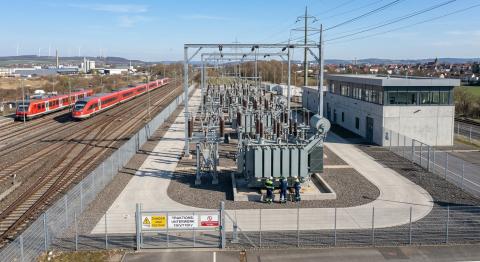
A voltage surge can enter a rail power system through several paths: the utility supply, exposed traction equipment, switching events, or connected signal and communication lines. A surge arrester or surge protective device can help limit overvoltage at a specific point, but the right protection plan depends on the system voltage, equipment being protected, grounding arrangement, and expected transient conditions.
For traction power and control rooms, that means looking beyond a single device. Protection should account for the power path and the sensitive circuits that support monitoring, communication, and control.
Key Takeaways
- Industrial surge protection should be selected for the circuit it protects, including its voltage type and operating conditions.
- Traction power systems and control room electronics can need different protection devices and layouts.
- Location and connection length matter: Swartz Engineering recommends mounting its DC arrester close to the equipment being protected.
- Surge protection works alongside grounding, overcurrent protection, and system design; it does not replace them.
- Railway projects should follow the standards and requirements applicable to the specific system and jurisdiction.
What Does Industrial Surge Protection Do?
Industrial surge protection limits transient overvoltage and directs surge current away from vulnerable equipment. A metal oxide varistor (MOV) device, for example, responds to an overvoltage by conducting surge current, helping reduce the voltage stress seen by connected equipment.
The device must match its circuit. An arrester intended for DC distribution is not automatically suitable for an AC panel, signal circuit, or data line. Engineers need to check the operating voltage, transient exposure, available fault current, grounding method, and the equipment’s withstand levels before selecting a device.
Swartz Engineering lists metal oxide surge arresters for DC distribution systems in transit, industrial, and mining applications. Its product information describes mounting the arrester close to the equipment being protected and using a conductor sized for anticipated surges.
Where Should Surge Protection Be Considered In Traction Power Systems?
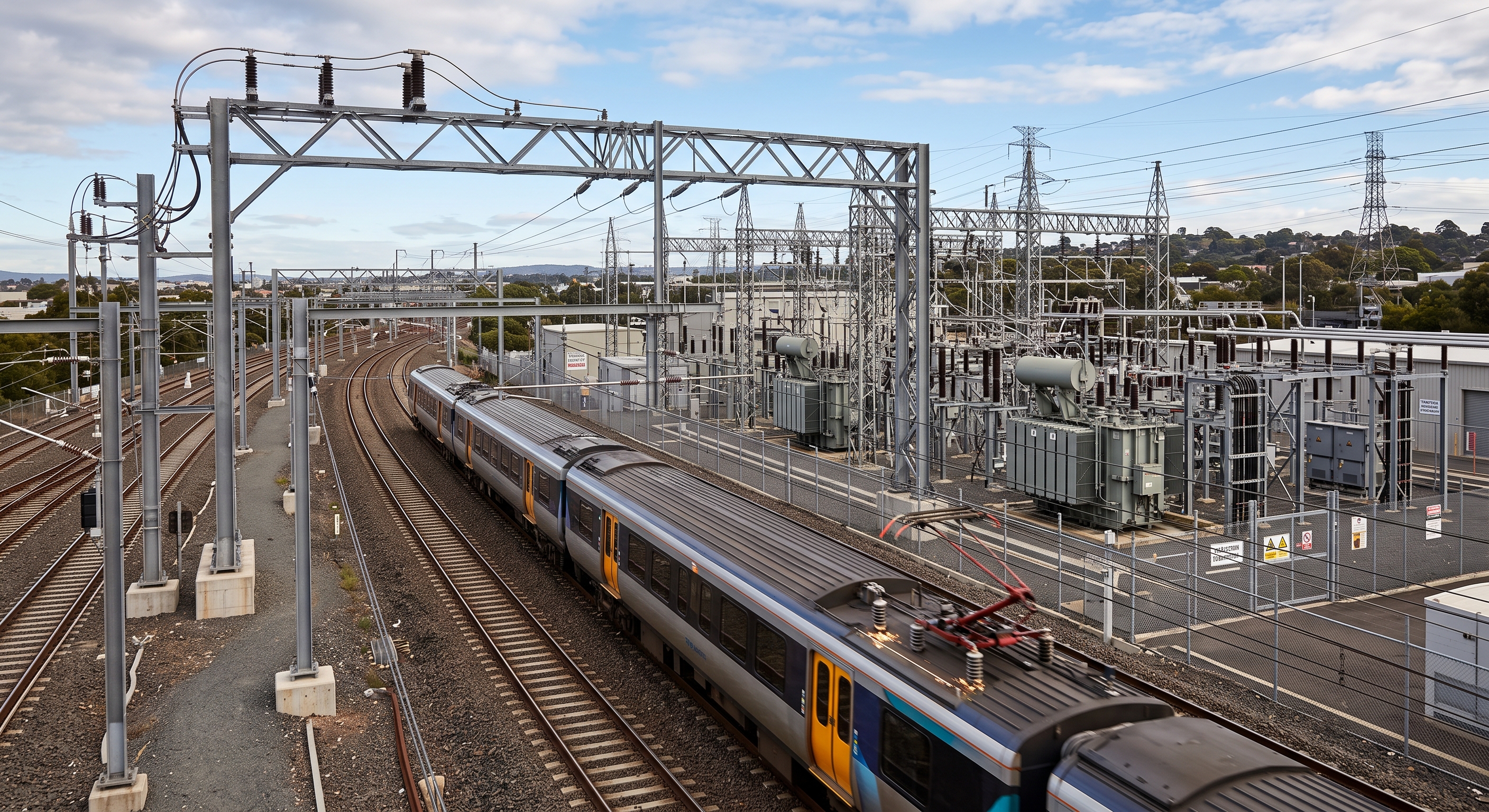
Protection points depend on the system design, but a review often considers the incoming supply, rectifier or substation equipment, DC feeders, and exposed traction infrastructure. Each point has different operating conditions, so a device chosen for one location may not suit another.
For example, a DC traction network may use an arrester at or near equipment such as a rectifier, substation, feeder, catenary pole, or power rail. Swartz Engineering identifies these as potential mounting locations for its DC arrester, with final selection depending on the application and electrical design.
Surge protection also needs to fit into the larger protection scheme. Circuit breakers, relays, fuses, grounding, and surge arresters serve related but different functions. Surge arresters limit transient overvoltage; protective relays and breakers detect and interrupt certain fault conditions. Neither role makes the other unnecessary.
IEC 63438:2024 sets railway-specific protection principles for fixed AC and DC electric traction power supply systems. It addresses protection-system functionality and design verification, while stating that it does not specify technical requirements for individual protection devices.
GET IN TOUCH
The ultimate solution for reliable power control! call us at 276-285-3841
Why Do Control Rooms Need A Separate Protection Review?
A control room can contain equipment supplied through several different circuits: AC utility power, DC control power, backup power, signal and data lines, and communications connections. A surge can affect one path while leaving others untouched, so protecting the main power feed alone may not protect every connected device.
A practical review should map the paths into and out of the room. Consider which circuits connect to monitoring equipment, control systems, communications, and remote field devices. Then confirm that each protective device is suitable for that circuit and coordinated with the equipment it serves.
Railway environments also introduce conditions that may not be obvious from a conventional building panel schedule. The power supply may come from the public grid, traction current, or emergency power, and operating return currents can create interference voltages. These factors should be part of device selection and system design.
How Do Engineers Choose The Right Surge Protective Device?
Start with the circuit, not a generic surge rating. Engineers should establish:
- Circuit type and voltage: AC or DC, nominal operating range, and maximum continuous voltage.
- Transient exposure: Likely surge sources and the installation’s exposure.
- Equipment withstand levels: What the protected equipment can tolerate.
- Fault conditions: Available short-circuit current and possible temporary overvoltage.
- Grounding and bonding: How surge current will be carried safely away.
- Installation location: The distance between the device and the equipment it protects.
- Coordination: How the arrester works with breakers, fuses, and other protection.
For DC low-voltage systems, IEC 61643-41:2025 covers surge protective devices rated up to 1,500 V DC. The IEC notes that the standard can apply to railway applications when related product standards do not exist for the particular area or use. It also calls for careful consideration when the power source differs from the linear source assumed in its test requirements.
For protection against lightning-related effects inside structures, IEC 62305-4:2024 addresses the design, installation, inspection, maintenance, and testing of surge protection measures for electrical and electronic systems. Railway systems may also have specialized requirements, so applicable railway and local standards should be reviewed for each project.
What Installation Details Affect Performance?
A suitable device can still perform poorly if it is installed incorrectly. Follow the manufacturer’s instructions and project design, paying particular attention to:
- Lead length and routing: Keep connections to the protected circuit short and direct where the design allows.
- Conductor sizing: Use conductors appropriate for the anticipated surge and installation.
- Grounding and bonding: Provide a properly designed path for surge current.
- Location: Mount the device near the equipment it is intended to protect.
- Status and inspection: Include the device in maintenance records and follow the manufacturer’s inspection and replacement guidance.
These details matter because surge protection depends on the complete path through the installation—not just the device itself. IEC 62305-4 includes inspection, maintenance, and testing as parts of surge protection measures for electrical and electronic systems within structures.
How Swartz Engineering Supports Dc Surge Protection
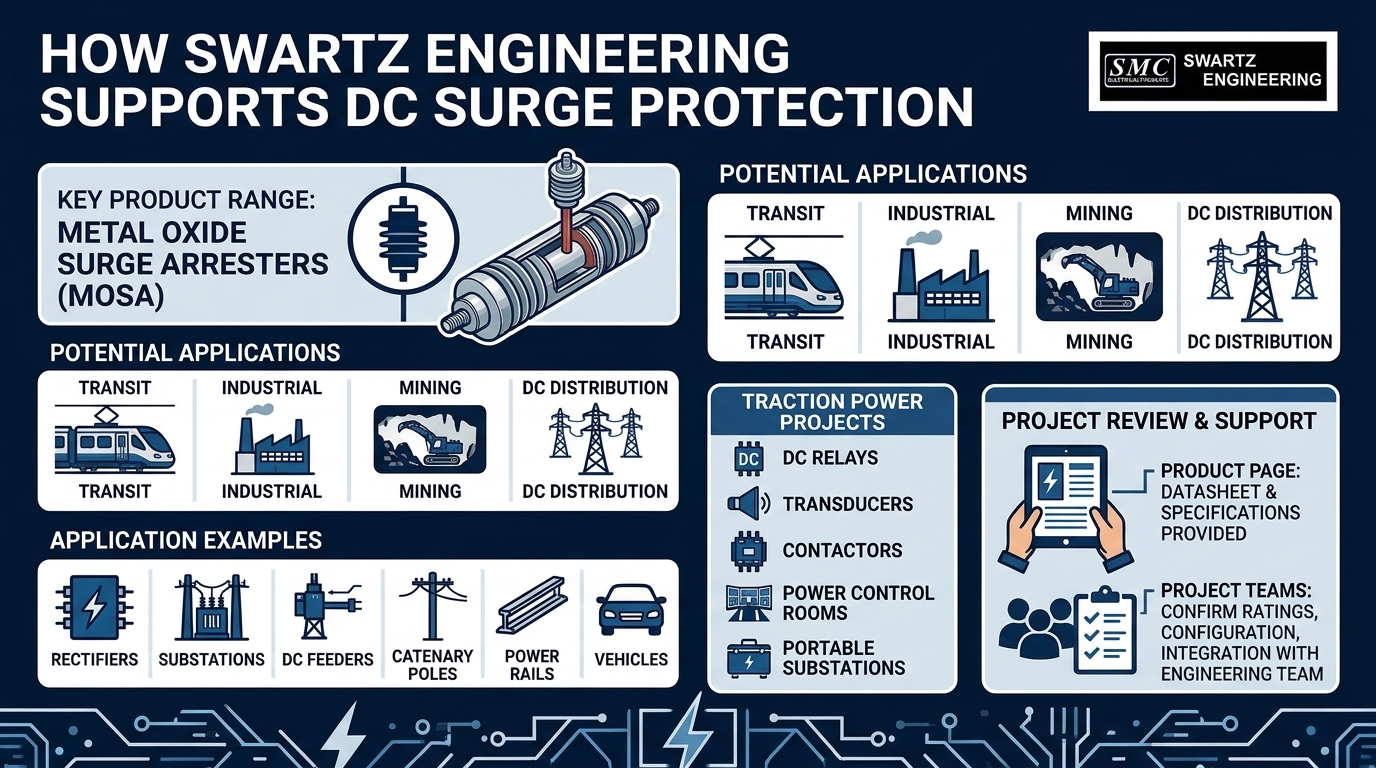
Swartz Engineering offers metal oxide surge arresters for DC distribution systems used in transit, industrial, and mining applications. The company lists potential applications that include rectifiers, substations, DC feeders, catenary poles, power rails, and vehicles. Its product page also provides a datasheet and specifications for project review.
For traction power projects, Swartz Engineering’s published product range also includes DC relays, transducers, contactors, power control rooms, and portable substations. The right equipment depends on the system requirements, so project teams should confirm ratings, configuration, and integration details with the engineering team.
GET IN TOUCH
The ultimate solution for reliable power control! call us at 276-285-3841
Plan Surge Protection Around the Full System
Industrial surge protection works best when it is selected for the actual electrical environment and installed as part of a coordinated design. For rail traction and control room power systems, review the incoming supply, DC distribution, exposed equipment, control circuits, and communications connections together.
Review Swartz Engineering’s metal oxide surge arresters and traction power substation equipment, or contact Swartz Engineering to discuss your application.
Frequently Asked Questions
Q: Does one surge arrester protect an entire traction power system?
A: Usually, surge protection must be considered at multiple points and for different circuit types. The required layout depends on the system design, exposure, equipment, and applicable standards.
Q: Can a DC surge arrester be used on an AC circuit?
A: Only if the device is specifically rated and approved for that AC application. A DC arrester should not be assumed suitable for an AC circuit.
Q: Should a surge arrester be installed close to the equipment?
A: Swartz Engineering recommends mounting its DC arrester as close as possible to the device being protected. Follow the product datasheet and project design for the specific installation.
Q: Does surge protection replace relays or circuit breakers?
A: No. Surge arresters limit transient overvoltage. Relays and circuit breakers address other fault conditions and perform different protection functions.
Q: Do control room signal and data lines need review too?
A: Yes. A control room can have power, signal, communication, and data connections, each with its own requirements. Review all connected paths when planning protection.
Products We Offer
Swartz Engineering strives to provide top-quality products to achieve our customer's needs. Our products include:
- Type 76 DC Relay
- Type 82 DC Relay
- Swartz Engineering’s Type 64 Ground Relay
- Type 32 Reverse Current Relay
- Type 150 DC
- CSM Shield Monitor
- Metal Oxide Surge Arrestors
- Transducers
- MVIS SL Slim-line Contactor
- Fully-tested Power Control Rooms
- Swartz Engineering’s Portable Substations
For nearly half a century, we have proudly led the industry in ensuring safety and efficiency. Swartz Engineering is a trusted family-owned company dedicated to providing top-notch power distribution solutions for the electrical industry. Contact us today.