
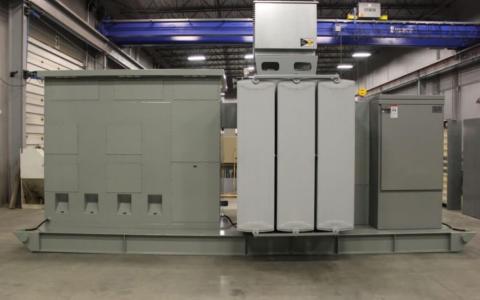
Across the high-traffic corridors of the United States, rail networks are pushing the limits of aging infrastructure. The sheer volume of freight and passenger transit demands more than just "keeping the lights on." It requires a railway control room that functions as a high-precision nerve center. Swartz Engineering builds these environments to be rugged, responsive, and ready for the 2026 digital shift, ensuring that dispatchers aren't just reacting to crises but are actively managing the flow of the entire network.
Key Takeaways
- Operational Integrity: Unified systems slash response times by eliminating data silos between signaling and dispatch.
- Tactical Ergonomics: Custom workstation layouts reduce operator fatigue during grueling 12-hour shifts.
- Future-Proof Scaling: Modular architecture allows for the integration of AI-driven predictive maintenance without ripping out existing copper.
- Hardened Security: Military-grade encryption protects critical infrastructure from escalating cyber threats.
Why Are Modern Railway Control Room Systems Vital For Safety?
A railway control room is the frontline of operational safety and network reliability. In the grit of daily operations, even a five-minute signal lag can ripple into a multi-hour delay across the district. Modern systems unify train tracking, track sensors, and emergency alerts into a single, cohesive interface. This high-density visualization allows teams to identify potential collisions or mechanical failures before they manifest as a headline on the evening news.
The Strategic Framework for Control Room Deployment
- Site Audit & Infrastructure Mapping: We don't guess; we verify.
- Assess legacy interlocking systems and relay logic currently in the field.
- Map existing fiber and copper runs to identify bandwidth bottlenecks.
- Unified Architecture Design: Building the digital backbone.
- Select industrial-grade servers capable of 99.999% uptime in vibration-heavy environments.
- Integrate Cross-Platform Signaling (CPS) to bridge the gap between different vendor hardware.
- Human-Centric Interface Build: Designing for the "Boots on the Ground."
- Develop "Dark UI" dashboard themes to minimize eye strain in low-light environments.
- Configure logic-based alerting to prevent "alarm fatigue" during peak traffic hours.
- Resilience & Cybersecurity Hardening: Protecting the network from external actors.
- Implement "Air-Gapped" backups for the most critical signaling databases.
- Deploy multi-factor authentication (MFA) at the hardware level for all dispatcher consoles.
GET IN TOUCH
The ultimate solution for reliable power control! call us at 276-285-3841
What Are The Core Components Of An Efficient Control Room?
The efficiency of a railway control room depends entirely on the seamless handshake between hardware and software. If your dispatchers are jumping between four different monitors just to clear a signal, your system is failing them. We prioritize integrated data visualization that pulls live positions, tracks health, and power substation status into one pane of glass. This isn't about fancy graphics; it’s about providing the technical "grit" needed to make split-second decisions when a freight line goes dark.
Operational Topic Clusters
- Network ROI: Reducing "dwell time" in yards through automated scheduling optimization.
- Technical Execution: Utilizing redundant VoIP communication channels to ensure dispatch never loses contact with field crews.
- Risk Mitigation: Real-time track condition sensors that alert the railway control room to thermal kinks or rail breaks instantly.
At-a-Glance: Legacy vs. Modern Control Systems
|
|
|
|
|
|
|
|
|
|
|
|
|
|
|
|
|
|
|
|
Essential Technical Entities
- SCADA (Supervisory Control and Data Acquisition): The industrial protocol used to monitor and control the physical track equipment.
- PTC (Positive Train Control): The federally mandated safety system that automatically stops a train if the operator fails to react.
- Headway Management: The technical calculation of the distance between trains to maximize track capacity without compromising safety.
- Interlocking Logic: The "fail-safe" arrangement of signals and switches that prevents conflicting movements.
Expert Perspective: The "Hidden" Failure Point
"Most engineering firms focus on the monitors. They forget the cabling. In a high-vibration environment like a rail hub, standard Cat6 won't cut it. We use shielded, industrial-grade cabling and vibration-isolated server racks because a loose connection at 3:00 AM is just as dangerous as a software bug." — Lead Systems Specialist, Swartz Engineering
GET IN TOUCH
The ultimate solution for reliable power control! call us at 276-285-3841
Ready to Modernize Your Railway Control Room?
In the rail industry, downtime isn't just a cost—it’s a disaster. Swartz Engineering delivers the technical expertise and "boots on the ground" experience required to overhaul your railway control room without interrupting current operations. Whether you are managing an urban transit hub or a cross-country freight line, our systems provide the clarity and control your dispatchers need to stay ahead of the curve. Contact Swartz Engineering to schedule your infrastructure audit today
Frequently Asked Questions
Q: How long does it take to upgrade a railway control room?
A: A full modernization typically ranges from 6 to 18 months. This timeline includes the initial site audit, custom software architecture, and a phased "hot-swap" implementation to ensure zero operational downtime during the transition.
Q: Can you integrate legacy signaling with new digital displays?
A: Yes. Swartz Engineering specializes in "bridge technology" that translates analog relay logic into digital data streams. This allows operators to see real-time data from 30-year-old switches on modern, high-definition dashboards.
Q: What is the most common cause of control room errors?
A: Information overload. When operators are forced to monitor too many unprioritized alerts, critical warnings get missed. We use logic-based filtering to ensure only the most relevant, actionable data hits the dispatcher's screen.
Q: Is cybersecurity a major concern for private rail lines?
A: Absolutely. As rail networks move toward IoT and cloud-based monitoring, they become targets for ransomware. We implement multi-layered security, including encrypted communication and hardware-level access controls, to keep the network closed.
Q: Does Swartz Engineering provide operator training?
A: We provide comprehensive, hands-on training for all new systems. Our engineers stay on-site during the "go-live" phase to ensure your dispatchers are comfortable with the new interface and emergency protocols.
Products We Offer
Swartz Engineering strives to provide top-quality products to achieve our customer's needs. Our products include:
- Type 76 DC Relay
- Type 82 DC Relay
- Swartz Engineering’s Type 64 Ground Relay
- Type 32 Reverse Current Relay
- Type 150 DC
- CSM Shield Monitor
- Metal Oxide Surge Arrestors
- Transducers
- MVIS SL Slim-line Contactor
- Fully-tested Power Control Rooms
- Swartz Engineering’s Portable Substations
For nearly half a century, we have proudly led the industry in ensuring safety and efficiency. Swartz Engineering is a trusted family-owned company dedicated to providing top-notch power distribution solutions for the electrical industry. Contact us today